Toyota DKR GR FC Hilux: Hydrogen Pickup Faces the 2027 Dakar as Toyota's Toughest FCEV Test
 global.toyota
Toyota is sending a hydrogen fuel cell Hilux to the 2027 Dakar Rally to test FCEV durability against desert heat, dust and 1,000 timed kilometres of punishment.
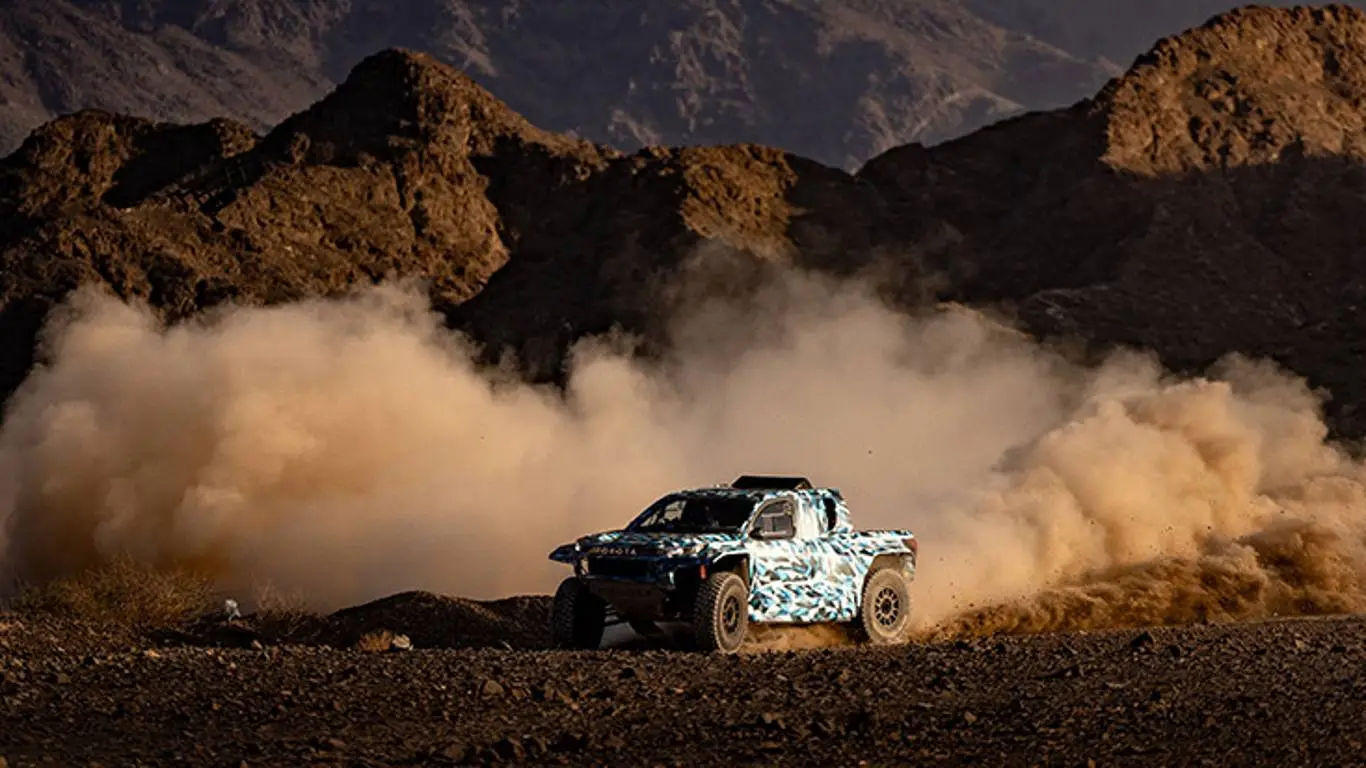
Toyota is taking the Hilux to Dakar not as a marketing exercise, but to put hydrogen fuel cells through a test where weak solutions break fast. The DKR GR FC Hilux prototype will line up at the 2027 Dakar Rally in the Dakar Future Mission 1000 category — not the headline class, but a dedicated arena for cars built around new technology.
The machine is based on the DKR GR Hilux already familiar from Dakar’s top category. The key difference: the petrol engine has been replaced with a Toyota fuel cell system. On the move, the car emits no CO2, and its only tailpipe emission is water. For an ordinary buyer, this is not a “coming to a showroom near you” story yet, but for Toyota it’s a way to find out whether FCEV hardware can survive the heat, the long stages, the rocks, the vibration and the dust.
The DKR GR FC Hilux will run the Dakar Future Mission 1000 format: 13 stages and roughly 1,000 competitive kilometres against the clock. The rally will take place in Saudi Arabia from January 1 to 15, 2027, with the start and finish set at King Abdullah Economic City. The engineers already know their targets: shrinking the fuel cell, cooling, durability and energy management. Assembly and calibration of the powertrain and software have begun in Belgium.
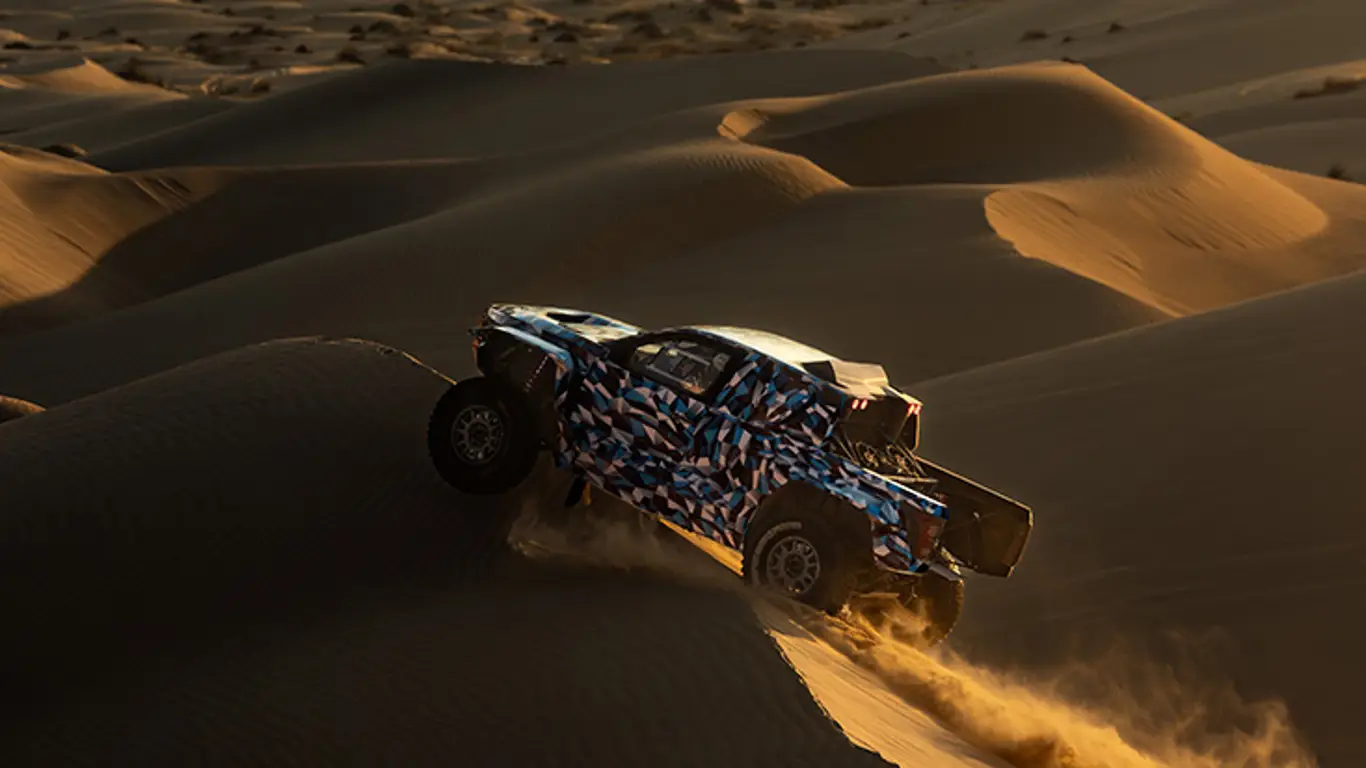
Interestingly, Toyota is running two parallel hydrogen tracks. The company has already shown hydrogen combustion engines: the Corolla H2 in Super Taikyu since 2021, the GR Yaris H2 at rally demonstrations, and the HySE-X1 and HySE-X2 in Dakar Future Mission 1000. Now, for the first time at Dakar, Toyota is betting on hydrogen paired with a fuel cell — effectively an electric vehicle without a large traction battery.
The comparison with the everyday Hilux matters more than it seems. The production pickup is valued for its diesel, its simplicity, its torque and its ease of repair — especially where the paved road ends. As reported by 32CARS.RU, on markets where hydrogen infrastructure is still absent and pickup ownership is built around diesel and long service life, this Dakar prototype is a very long way from being a practical alternative.
Even if the technology matures, it will still need fuelling infrastructure, certification, service training and a clear warranty on the powertrain. In practical terms, the closest real-world rivals to a rugged pickup like the Hilux remain diesel body-on-frame trucks and SUVs — from the Hilux itself and Land Cruiser to Tank, Great Wall Poer and the growing wave of Chinese body-on-frame models.
For Toyota, Dakar in this story isn’t a “clean-future” advert — it’s a brutal test bench. If the fuel cells survive the desert, the technology will gain an argument stronger than any press release.