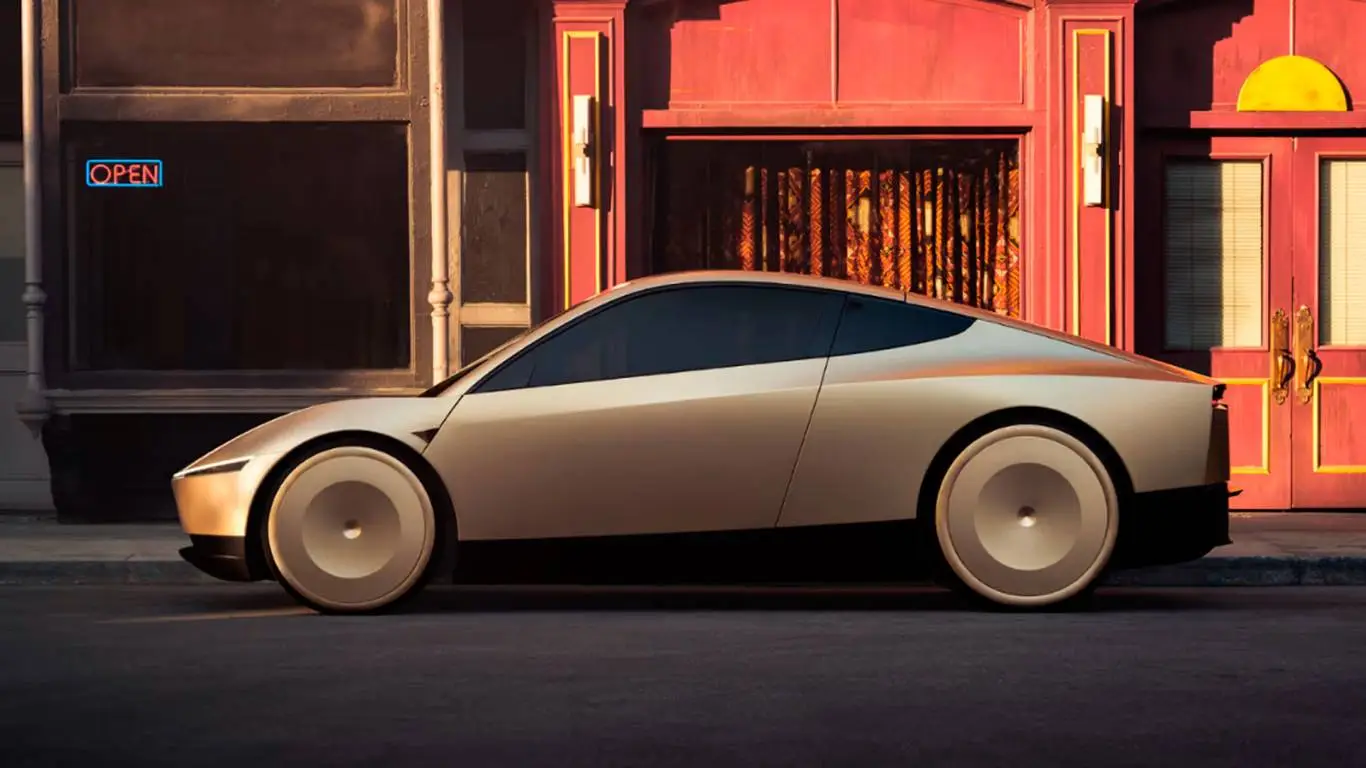
Tesla Cybercab: the gold isn't paint — the color is molded into the panel
 tesla.com
Tesla uses reaction injection molding to build color into the Cybercab's panels, cutting the paint cycle from hours to minutes and eliminating paint shop emissions.
Tesla has explained what lies behind the Cybercab's signature gold — and it isn't only a styling choice. The car relies on a process called reaction injection molding, or RIM, in which the color is built straight into the panel material as it is formed.
Normally a body panel is made first and then pushed through a separate, multi-stage paint process. On the Cybercab it works differently: the pigment becomes part of the polymer mix injected into the mold. The panel comes out already colored, and the protective layer goes on far faster — sometimes during one of the molding stages itself.
According to Tesla, this shrinks the paint cycle from hours to minutes. The company also claims a 35% drop in manufacturing and logistics emissions for these parts, plus the complete removal of the volatile organic compounds released by traditional painting.
RIM itself is nothing new — it has been around since the 1960s. What stands out is Tesla's use of it on exterior panels, which normally demand a dedicated paint job. It fits the company's long-running strategy of simplifying production, cutting out costly paint shops and dropping extra steps. Tesla applied the same logic to the Cybertruck, giving it an unpainted stainless steel body.