Kia EV9 at BIMOS 2026: Light, Earth, GT-Line and GT in One Lineup
 D.Novikov / 32CARS
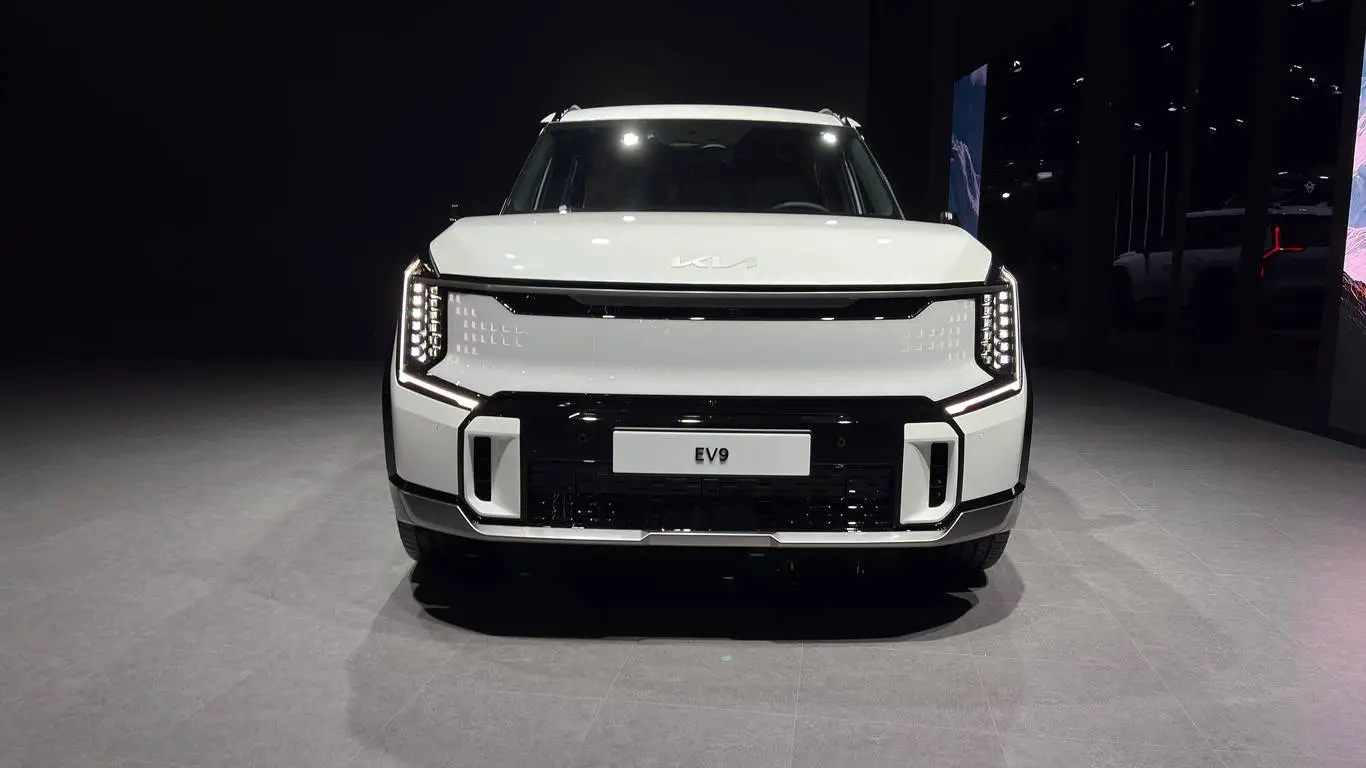
Kia put the 2026 EV9 in the Premium Lounge at BIMOS 2026 — a luxury refresh with suede, a returning Light trim, and a flagship that finally feels its price.
At BIMOS 2026 in Busan, the Kia EV9 skipped the loud trick — no new battery, no record sprint. The white three-row SUV sat in the Premium Lounge and quietly made a different argument: a flagship doesn’t always need extra horsepower; sometimes it just needs to feel more expensive.
For the 2026 model year, the EV9 gets what Kia itself calls a luxury refresh. From the Air trim upward, the dashboard and door armrests are wrapped in suede, the matte plastic on the steering wheel and door cards is replaced with dark grey gloss, and the swivel second-row seats in the six-seat layout now heat the third row as well. Every trim gets an emergency LED in the tailgate. Small touches — but it’s details like these that finally stop a big family EV from looking like “just a battery on wheels”.
The biggest move is the return of the Light base trim. It runs a 76.1 kWh battery, a 160 kW rear motor — around 218 hp — and offers roughly 370 km of range. The Light Long Range steps up to 99.8 kWh and nearly 490 km, but keeps a single 150 kW motor. The dual-motor AWD Earth and GT-Line deliver 283 kW (379 hp) and 600 Nm, hit 100 km/h in 5.4 seconds and cover up to 455 km.
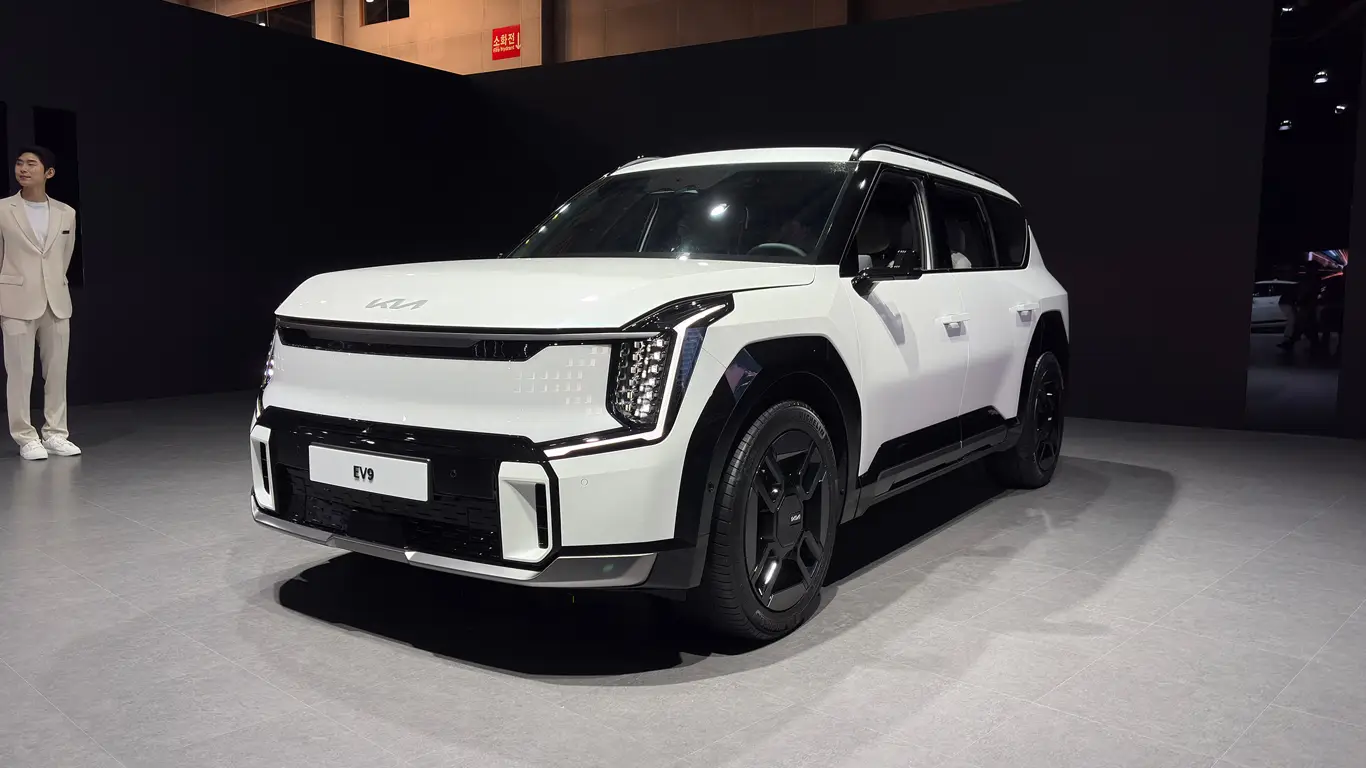
For buyers who still want big numbers, there’s the EV9 GT: 374 kW, 508 hp, 740 Nm and 4.5 seconds to 100 km/h. But the Premium Lounge display wasn’t the GT — it was a calmer EV9 without the suffix. A subtle but clear signal: Kia wants to prove the regular version also looks like a flagship, not just the range-topper with neon calipers and an electronic diff.
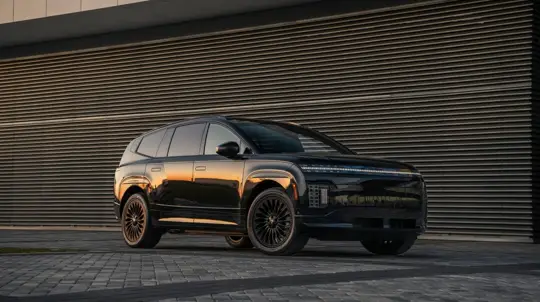
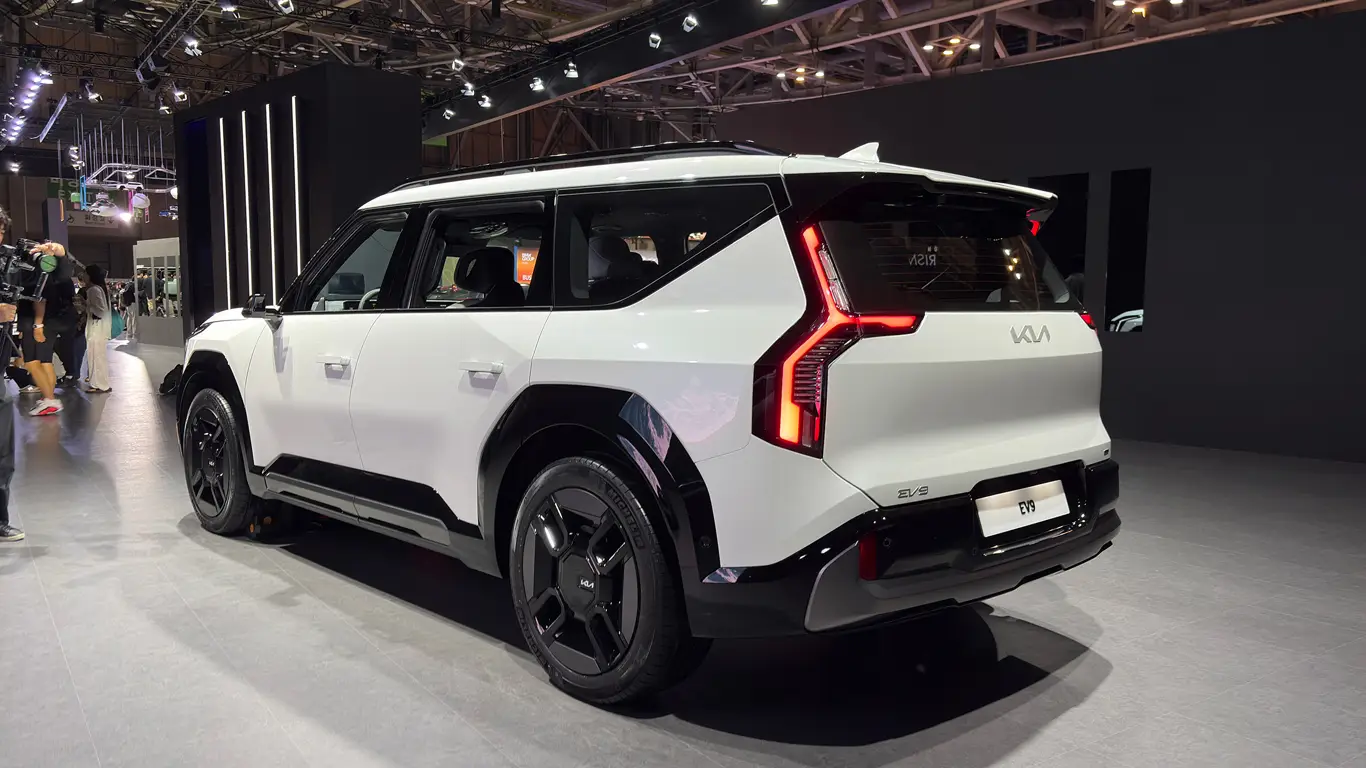
The bodywork is barely touched, yet the black-and-white styling lands hard. White paint, black wheel arch extensions, dark five-spoke wheels, a blacked-out rear quarter and the sharp Star Map lighting push the EV9 close to the Nightfall Edition mood — without it being a separate package. At 5009 mm long, 1980 mm wide and with a 3100 mm wheelbase, it remains one of the largest electric SUVs from a mainstream brand. By format it sits closer to the Hyundai Ioniq 9 and Volvo EX90 than to ordinary mid-size crossovers.
The tech is still the strong card. The 800-volt E-GMP platform supports charging up to 350 kW, the large battery moves from 10 to 80% in 24 minutes, and there’s V2L for external devices and Highway Driving Assist 2. Against that backdrop the cabin upgrade makes sense: on charging speed the EV9 is already competitive; on perceived quality it now has to fight not only Hyundai but also Volvo, BMW and Mercedes.
In the US, the 2026 EV9 starts at $54,900, with the Light Long Range from $57,900. In Germany, the flagship EV9 GT opens at €90,490 — price territory usually claimed by European premium brands. Hyundai’s Ioniq 9 plays the same idea back home in Korea — big, family-friendly, electric, fast-charging — so Kia has to do more than match prices: it has to show why the EV9 feels like a standalone flagship and not just a sibling model with different design language.
As 32CARS reporters note, this year’s BIMOS was quieter, with several Japanese and European brands skipping Busan — but for Kia that’s a useful backdrop. The EV9 didn’t ask for attention with a loud show: it stood there like an object you’d already buy not for the spec sheet, but for the simple confidence that a big electric car has finally stopped looking like an experiment.