Genesis at BIMOS 2026: Magma GT Concept and GMR-001 Hypercar Share the Stage
 D.Novikov / 32CARS
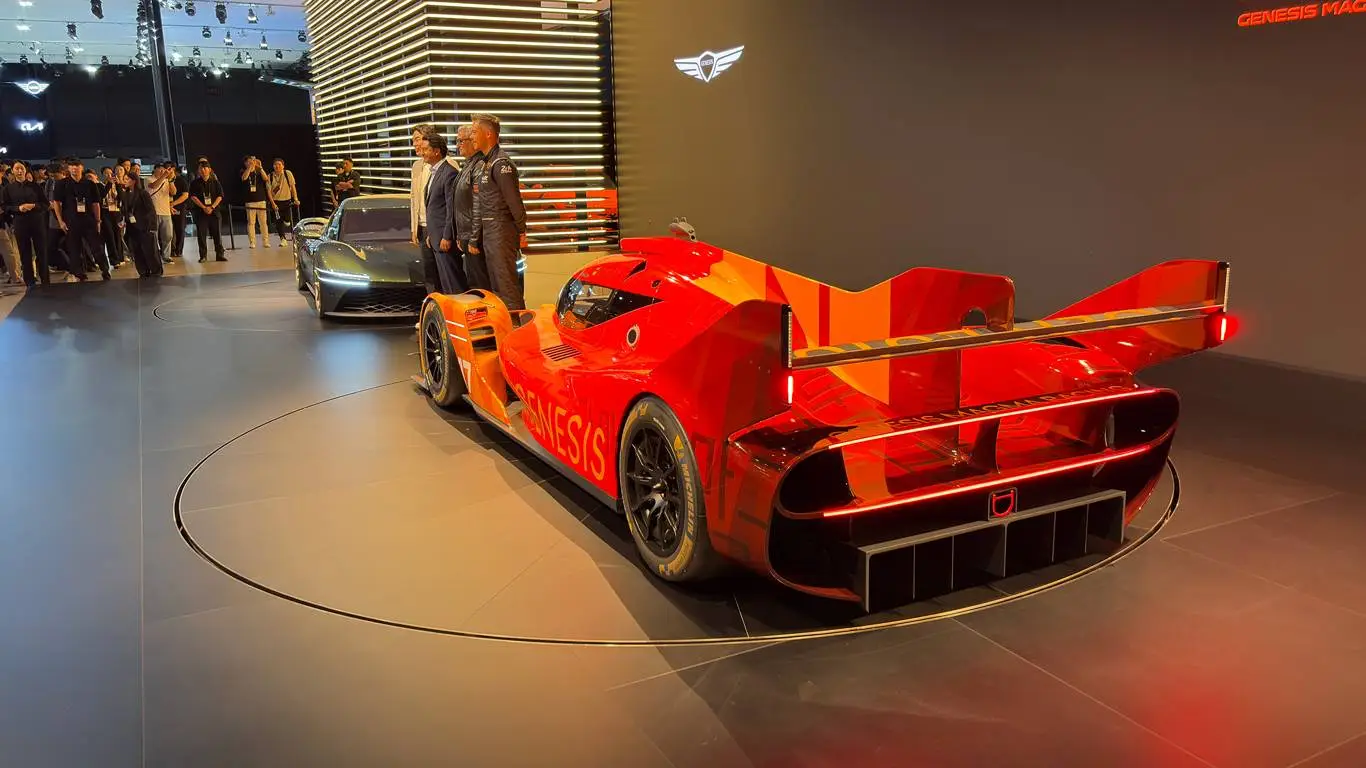
Genesis showed its green Magma GT Concept next to the orange GMR-001 WEC car at BIMOS 2026 — a clear roadmap from racetrack to a future road-going hypercar by 2028.
Genesis brought two cars to its Busan stand, and together they explained the brand better than any press release. The green Magma GT Concept hints at a future road-going hypercar, while the orange GMR-001 is already a competition machine built for WEC. The pair isn’t set dressing — it’s a roadmap: racing first, then a high-priced production car that carries the same nerve.
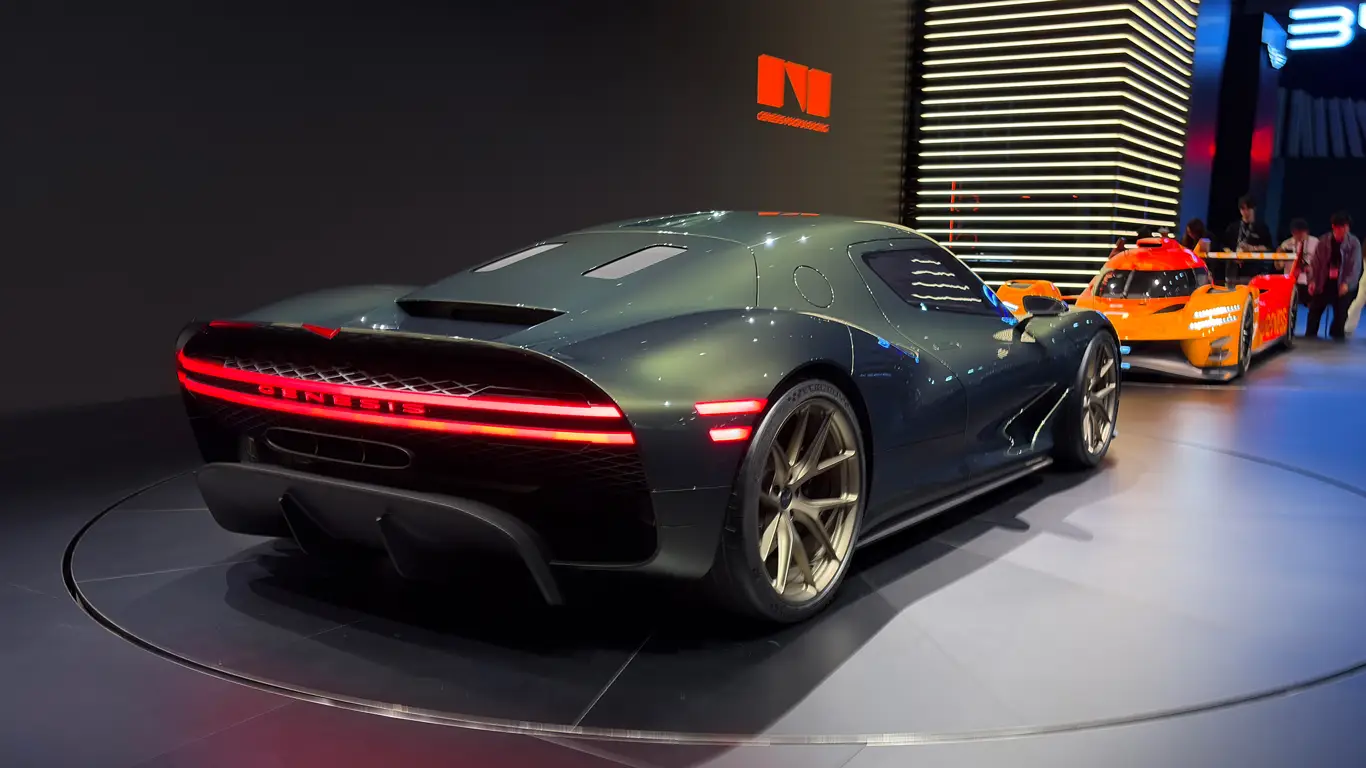
The Magma GT Concept first appeared in November 2025 at the Circuit Paul Ricard in France, but it arrived in Korea in a different guise. Instead of the signature Magma Orange, the car now wears a deep green chameleon paint paired with copper wheels; instead of a sealed mystery, it offers an open cockpit with an analog instrument cluster, three round dials and a small display that looks almost like a concession to the modern era. In an age of giant screens, Genesis is suddenly building a hypercar where the needles, the seating position and the feel of the machine matter more.
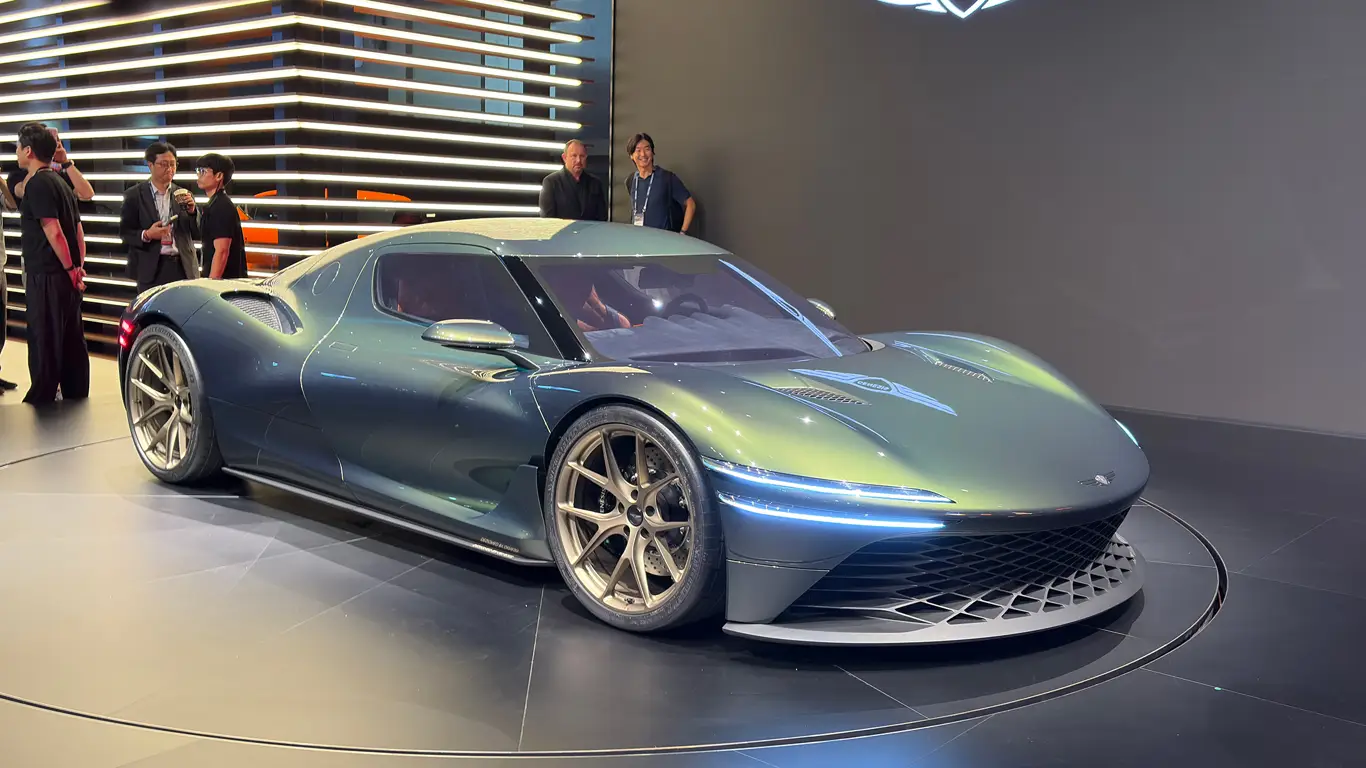
Mechanically it’s a two-seat mid-engine coupé. Genesis talks about a twin-turbo V8 with a projected output of up to 800 hp, but production specifications remain under wraps. According to Western press reports, the road car’s engine will grow out of the racing programme: the GMR-001 uses a 3.2-litre twin-turbo V8 known as G8MR, built on the basis of Hyundai Motorsport’s 1.6-litre rally four, and that same architecture is being discussed as the foundation for the Magma GT. In other words, the concept isn’t drawn in isolation from motorsport — it’s being raised alongside the race car.
The bodywork doesn’t try to look like a conventional grand tourer either. The cabin is pushed forward, a long boat-tail dominates the rear, and even the production version is set to do without a rear window — the view will be replaced by a camera and a screen. An active splitter, headlight-area canards and aero solutions closely related to the GMR-001 all push the same message: Genesis doesn’t want a sport package for a wealthy crossover, it wants a flagship with character of its own.
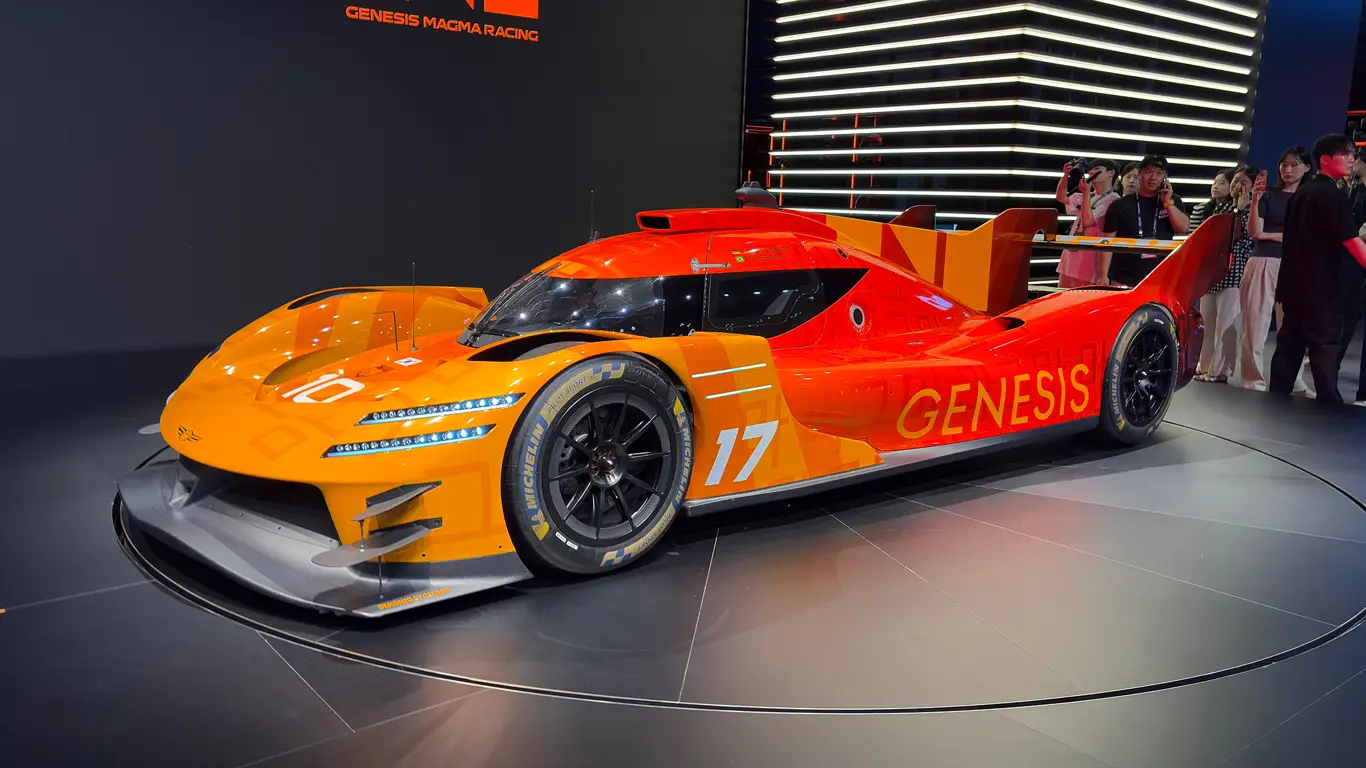
Next to it stood the GMR-001 Hypercar, the LMDh prototype from Genesis Magma Racing, developed together with ORECA Motorsport for the 2026 FIA WEC season. The team has already completed its first 24 Hours of Le Mans in June, with an IMSA entry scheduled for 2027. The driver line-up isn’t random either: André Lotterer, three-time Le Mans winner with Audi, and Pipo Derani. For a young premium brand, this is the fastest way to take a seat at a table where Porsche, Ferrari, Aston Martin and Cadillac have been sitting for years.

The production Magma GT is expected by 2028. No official price has been named, but the Western press is talking about a $150,000–$200,000 range. According to 32CARS.RU, if Genesis stays inside those numbers the car will sit below a Porsche 911 Turbo S, which starts at around $272,650 in the US, and closer to the McLaren GTS niche, where new cars usually clear $230,000 with ease. But Porsche has decades of reputation, McLaren has carbon fibre and a supercar bloodline, and Genesis will need to sell not just power but the right to play in this class at all.
That’s the intrigue. The Magma GT doesn’t have to be the fastest one out there yet; it has to prove that Genesis can stand next to a race car and not look out of place on its own stage.