BMW M 1000 RR for Korea: Euro 5+ superbike with new winglets and Slide Control
 D.Novikov / 32CARS
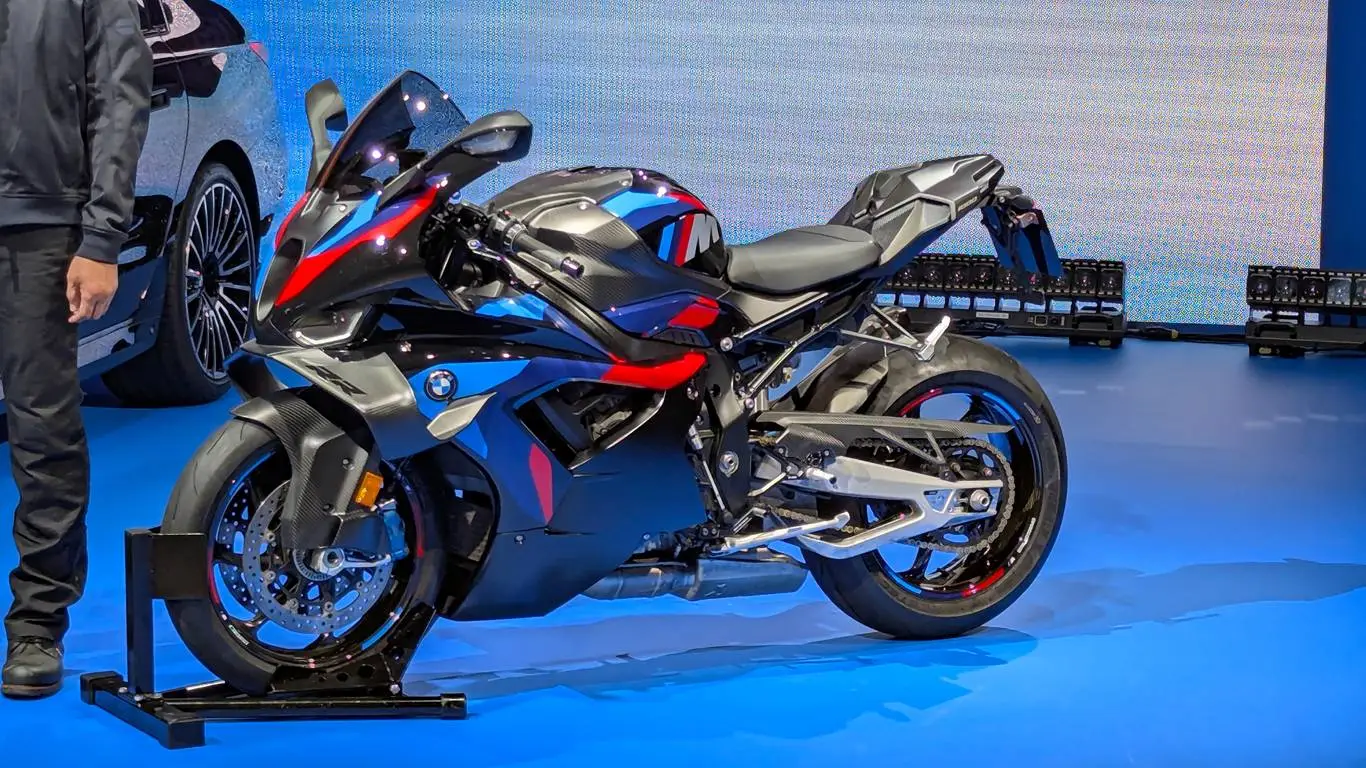
BMW brought the updated M 1000 RR in M Competition trim to BIMOS 2026 in Busan — 218 hp, 314 km/h, carbon winglets 3.0 and steering-angle-sensor electronics.
On BMW’s stand in Busan, the most audacious exhibit turned out to be not the 7 Series sedan or the electric iX, but a motorcycle with a big M on the tank. The BMW M 1000 RR was placed at the heart of the Korean premiere as a reminder: BMW Motorsport doesn’t just build cars — it also builds machines you can take straight to the track with barely a second thought.
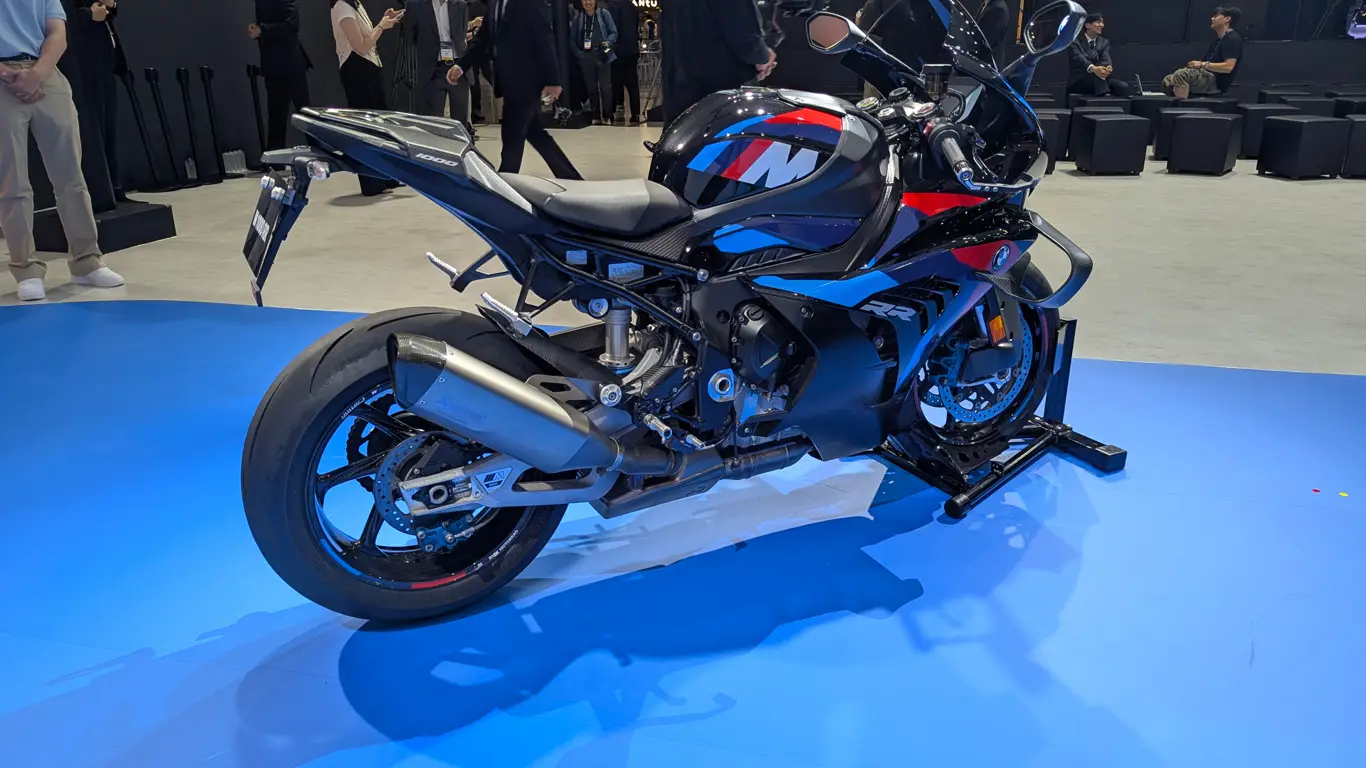
Korea got the updated M RR in the M Competition spec, according to 32CARS reporters at the event. That means exposed carbon, M Winglets 3.0, carbon fenders and a titanium Akrapovic — not a cosmetic “sporty” kit but a setup that’s close to a full race build. The inline-four 999 cc with ShiftCam, in European spec, puts out 218 hp at 14,500 rpm and 113 Nm at 11,000 rpm. The gain over the previous version is 6 hp, but the more interesting figure is how high BMW keeps the engine’s working zone: a redline of 15,100 rpm on a production litre engine sounds almost provocative. The engine has been homologated to Euro 5+ standards.
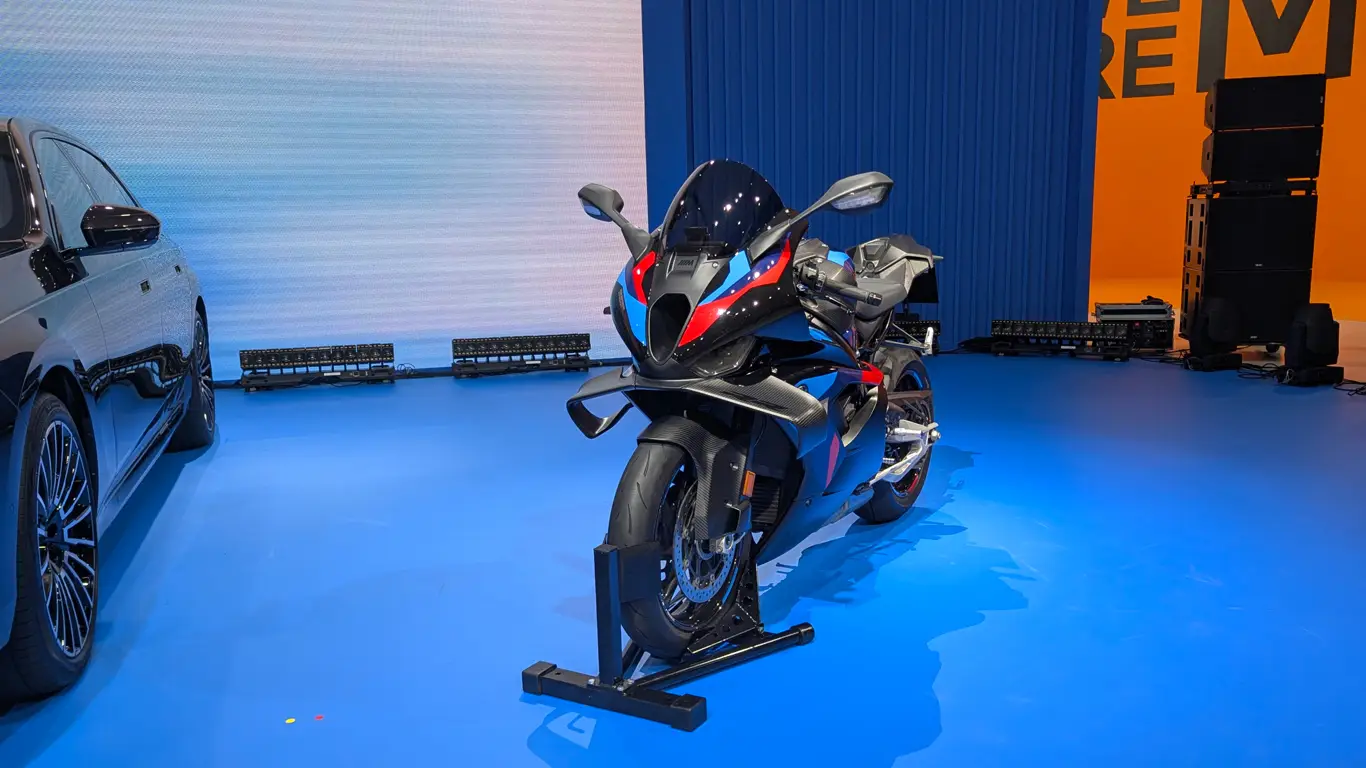
The M 1000 RR weighs 193 kg with a full tank. Top speed is 314 km/h. The new carbon winglets raise downforce at 300 km/h from 22.6 to 30 kg with no penalty in drag. That’s overkill for the road, but on track this aero solves two awkward problems for any litre superbike: it keeps the front wheel from going light under acceleration and helps you brake harder into a corner.
The most interesting part is hidden not in the carbon but in the electronics. Dynamic Traction Control gets a Slide Control function: using wheel sensors, the IMU and the steering-angle sensor, the system manages controlled rear-end slides under acceleration. Slides under braking are handled by Race ABS Pro and its Brake Slide Assist — same steering-angle sensor, but now working on corner entry. On top of that you get seven riding modes, Launch Control, a Pit Lane Limiter and M Shift Assistant Pro with the option to flip the shift pattern to the race configuration. This isn’t just “a fast bike for the brave” anymore — it’s a machine that tries to give the rider a margin for error where there used to be only reflexes.
BMW Motorrad didn’t announce a Korean price at the press day. In Germany the base M 1000 RR starts at around €36,300; in the US the 2026 model year starts at $42,895 before destination. The M Competition shown in Busan, with its carbon and Akrapovic, will be noticeably more. On the market it lands right between the Japanese litre sportbikes and the Ducati Panigale V4 R: the Ducati sits around $50,000 in the US, but BMW has a strong hand — race homologation, electronics and the M badge, which makes sense even to people who’ve never watched WorldSBK.
For a motorcycle like this, BIMOS 2026 is more than a showcase. In Korea the Japanese Big Four are traditionally strong, Ducati has long owned the Italian-dream image, and BMW brought its argument with no diplomatic dressing: carbon, 314 km/h and the kind of tech you’d rather discuss in the pit lane than over a coffee at the stand.