Hyundai Ioniq 9: 422 hp, 539 km of EPA range, NACS port and Pikachu in the cluster
 D.Novikov / 32CARS
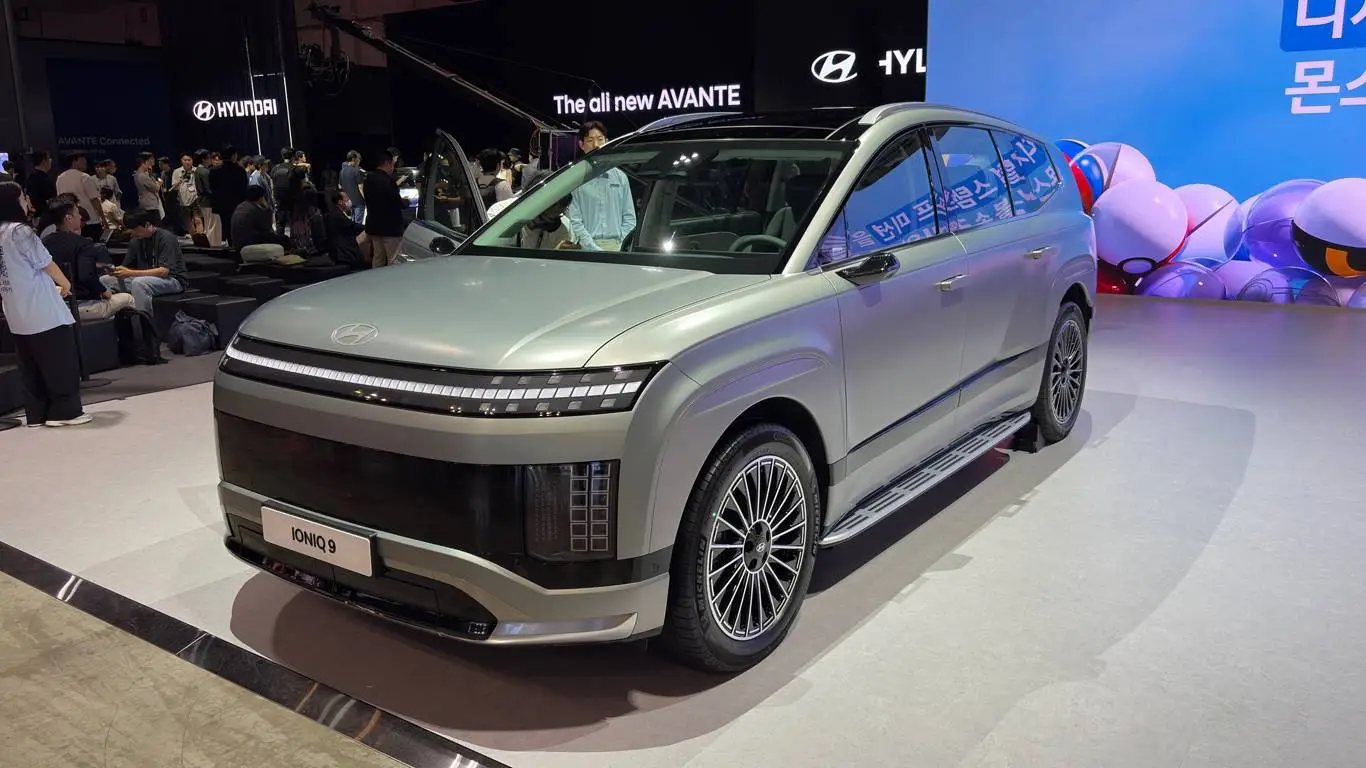
Hyundai showed the Ioniq 9 in Busan: a 110.3 kWh 800V battery, up to 422 hp, 539 km of EPA range, native NACS charging and a Pokemon theme on the dashboard.
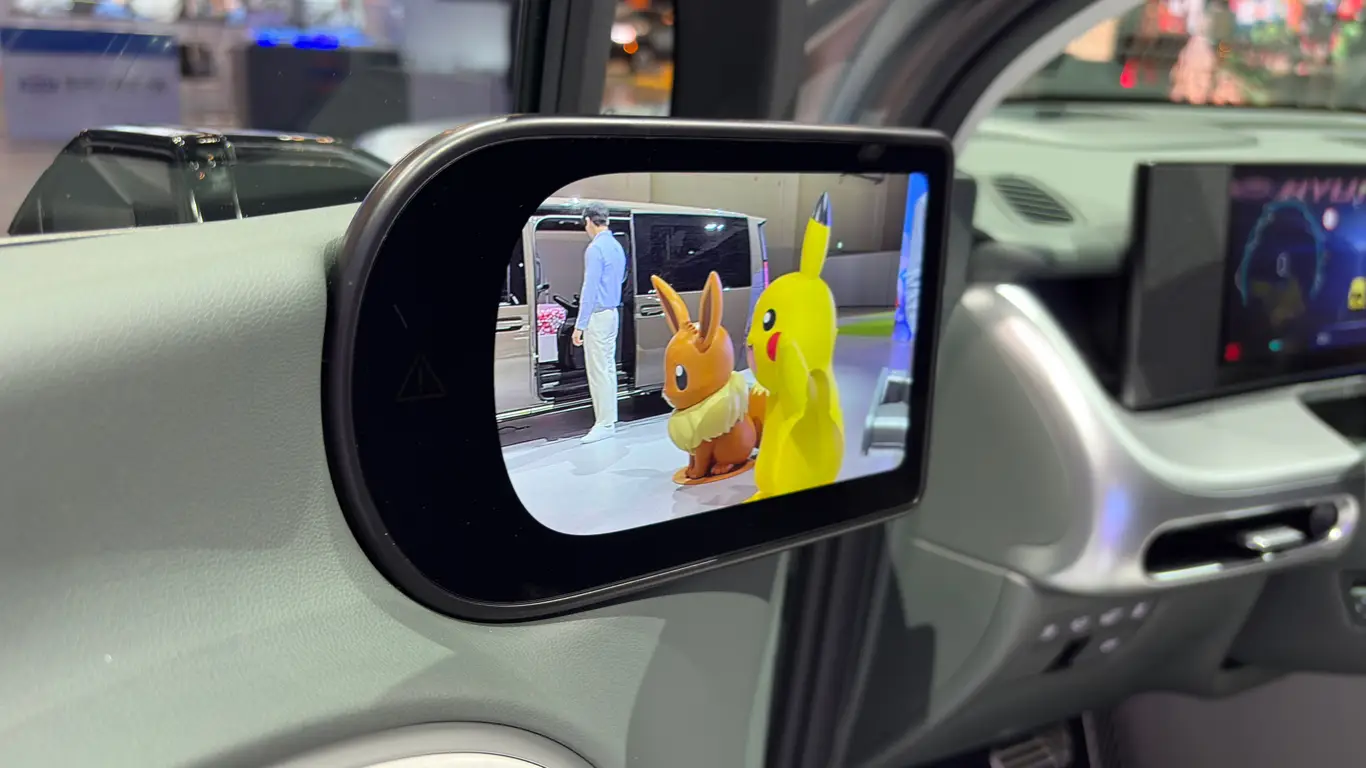
On Hyundai’s stand in Busan, the Ioniq 9’s digital side mirror shows no other cars and no lane markings — just Pikachu and Eevee. It’s not a camera glitch: the Pokemon figurines were placed next to the car on purpose so that they would fall into the Digital Side Mirror screen and instantly explain the main idea — Hyundai is trying to sell its EV not only on range, but on the digital experience as well.
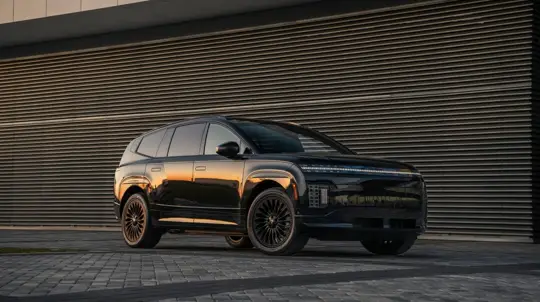
The Ioniq 9 itself is anything but a toy. It’s the flagship of Hyundai’s electric line-up and the brand’s largest passenger EV: 5060 mm long, 1980 mm wide, 1790 mm tall, with a 3130 mm wheelbase. The wheelbase is longer than on many full-size SUVs, and the architecture here doesn’t come from the Palisade — it’s built on the E-GMP platform with an 800-volt system and a 110.3 kWh battery.
The exterior follows Hyundai’s Aerosthetic design language: thin LED bars, pixelated headlight blocks, an almost closed-off front end, chunky side sills and 21-inch Michelin Primacy Tour wheels. With the digital mirrors fitted, the drag coefficient is rated at Cd 0.259 — a strong number for a big three-row SUV, especially considering its near-1.8 m height.
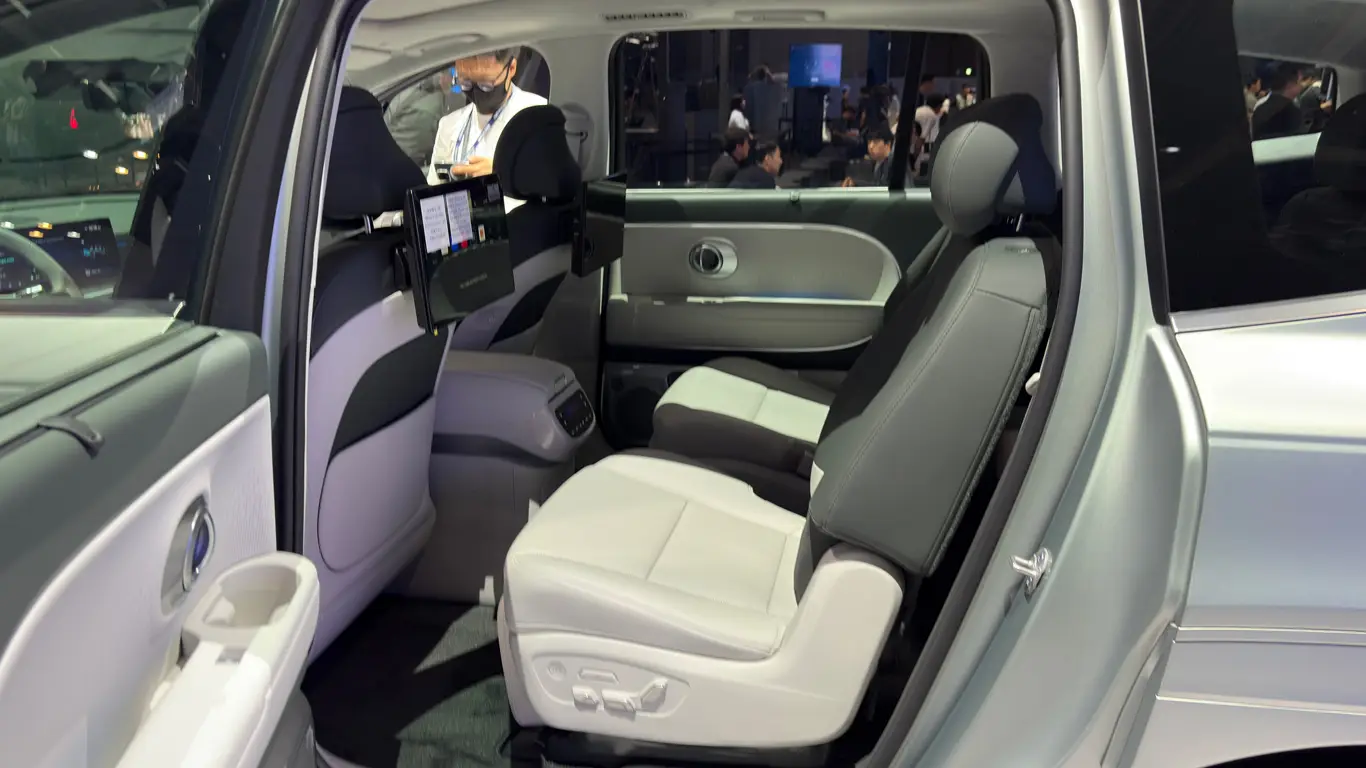
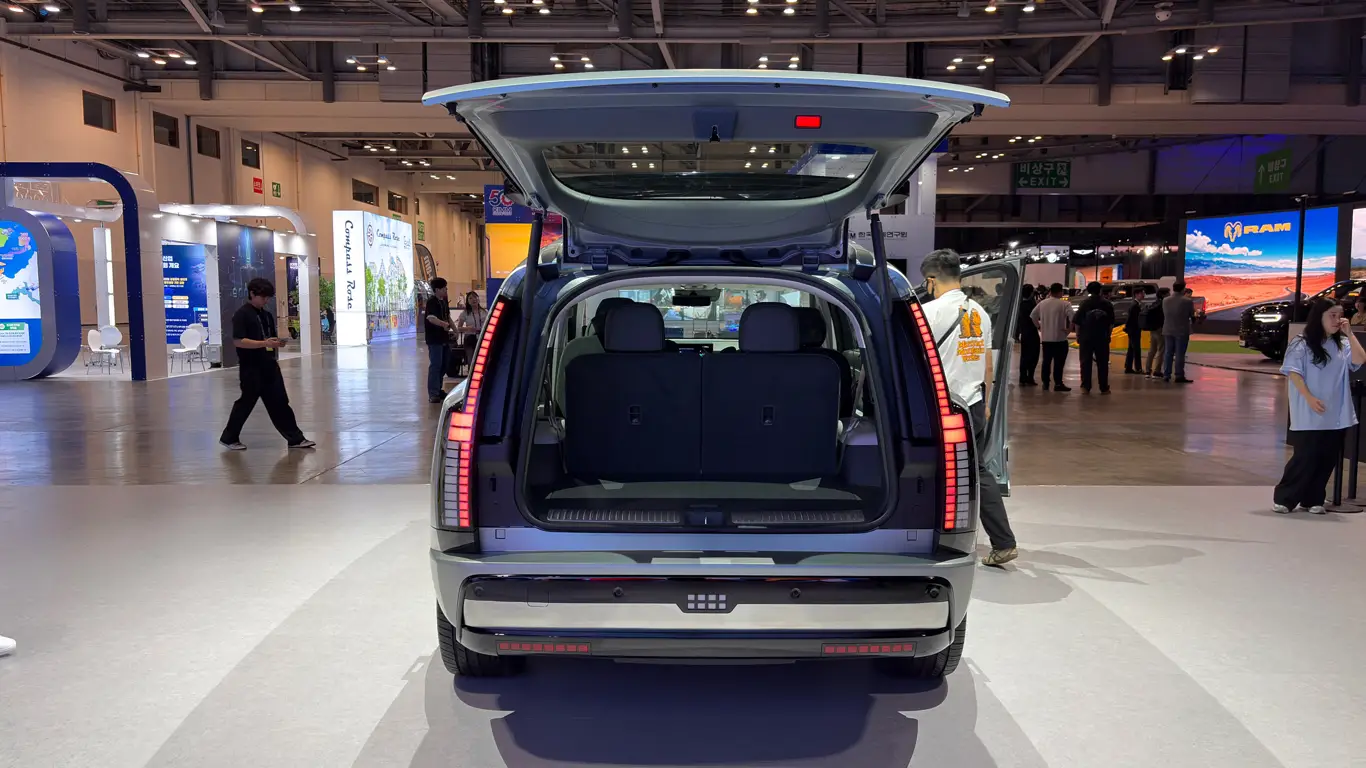
According to 32CARS.RU, the model’s practicality isn’t for show. The third row is meant for more than kids: the seats have their own headrests and three-point belts, and access is arranged through the second row. There are two cabin layouts — a 7-seater with a bench and a 6-seater with two captain’s chairs. The BIMOS car was the 6-seat Calligraphy with individual second-row seats and power adjustments.
In the top trim, the front and second rows get Premium Relaxation Seats: the cushion slides forward, the backrest reclines into a relaxed position, and the passenger essentially sits as in business class. The seatbacks of the front chairs carry separate displays with OTT services including Netflix, YouTube, Disney+, Wavve, TVING, Spotify and LG U+. For a family long-distance EV, that matters more than another tenth of a second in the sprint.
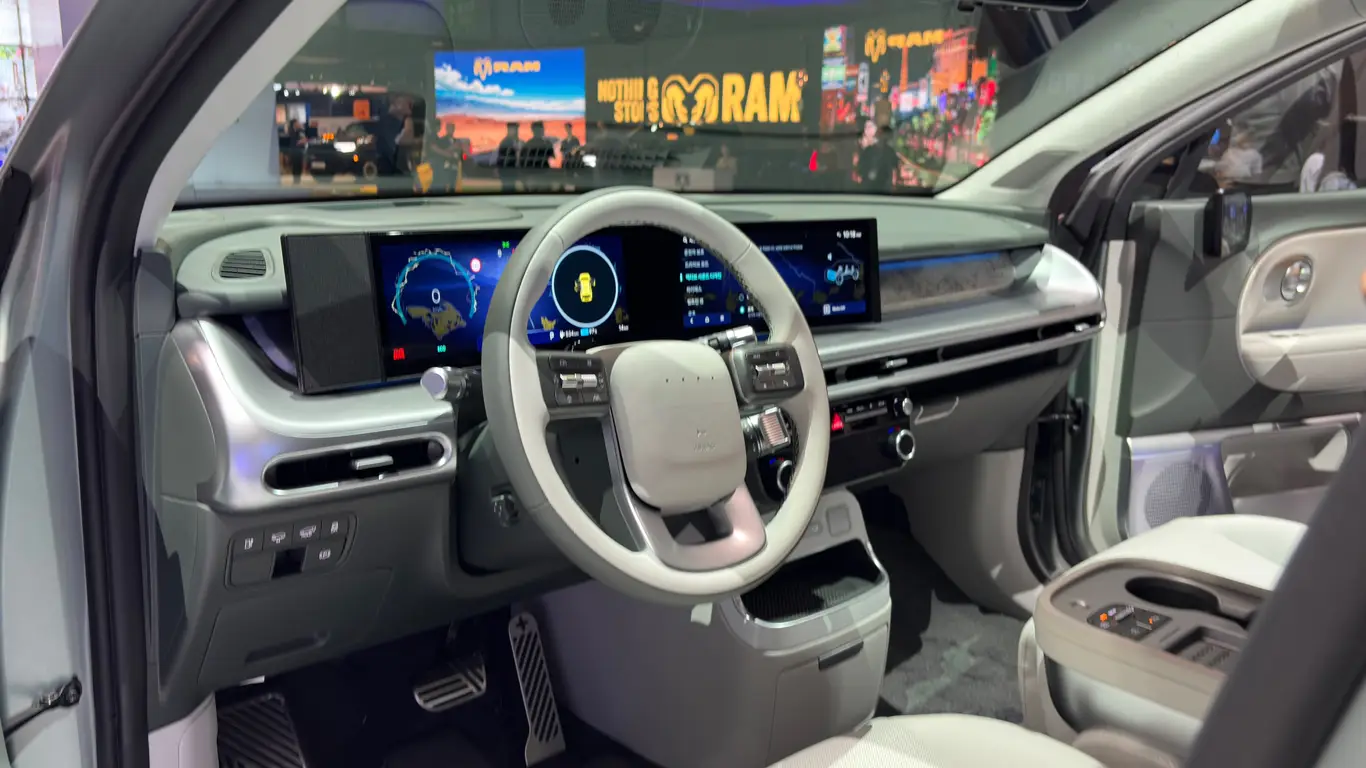
In front of the driver sit two curved 12.3-inch displays, with separate digital side mirror screens at the edges of the panel. Hyundai has kept physical buttons and rotary controls, and moved the gear selector to a stalk on the right behind the wheel, freeing the centre tunnel for cupholders and a wireless charging pad. The result is a cabin where there are plenty of digital screens, but the basic actions aren’t completely buried in menus.
A separate emphasis is silence. The Ioniq 9 is the first Hyundai outside Genesis with Active Noise Control: the system uses the speakers to cancel low-frequency noise in counter-phase. Acoustic windshield glass and sound-absorbing tyre inserts have been added. For a big electric crossover that’s critical: when there’s no engine, the tyres, wind and body boom start to define how premium the car feels.
There are three powertrain versions. The base S is rear-wheel drive, with 215 hp and up to 539 km of EPA range. The mid-spec SE/SEL trims get two motors, all-wheel drive, 303 hp and up to 515 km. The top Limited, Calligraphy and Calligraphy Design Performance push out 422 hp and 700 N·m, sprint to 100 km/h in around 5.2 seconds and cover about 500 km on the EPA cycle. DC fast charging tops out at 350 kW, with a 10–80% top-up taking roughly 24 minutes.
For the US there’s an important detail — a native NACS port from spring 2026. That means the Ioniq 9 can be charged at Tesla Supercharger stations without an adapter, and for the American buyer that’s now no less important than horsepower or cabin leather. Prices there start at $60,555 for the base S and climb to $79,090 for the Calligraphy Design Performance, before tax, delivery and dealer mark-ups.
Now back to Pikachu. In February 2026 Hyundai announced a collaboration with Pokemon Korea for the franchise’s 30th anniversary. For Korean ccNC-equipped models — the Palisade, Ioniq 9, Nexo, updated Ioniq 6, 2026 Sonata The Edge and Staria — it released two dashboard themes: Pokemon Pikachu Quick Attack and Pokemon Ditto World. The price is 29,900 won, around $21 at current rates, a lifetime licence through the BlueLink Store or MyHyundai app.
This isn’t just a wallpaper. The themes change the start-up and shut-down animations, the speedometer, the navigation and the overall visual style of the interface. The car on the BIMOS stand was running Pikachu Quick Attack — which is why Pikachu ended up not only next to the car, but also on the speedometer dial. Hyundai is openly playing to a generation for whom the car has become just another screen, and buying a digital look feels almost like buying a game skin.
The Ioniq 9 will compete with the Kia EV9, Rivian R1S, Volvo EX90, Mercedes EQS SUV, Cadillac Vistiq and big petrol three-row SUVs, for buyers not yet ready to switch fully to EVs. Hyundai’s strengths are the large battery, the 800-volt architecture, space, quietness and access to Superchargers in the US. The weak spots are familiar: real-world winter range, insurance costs, residuals and the dependence on the fast-charging network.
At BIMOS Hyundai showed that a flagship EV is no longer sold purely on kilowatts. The Ioniq 9 has to be big, quiet, fast and family-friendly — and at the same time digital enough that Pikachu in the cluster looks not like a random joke but like part of a new automotive culture.