Toyota Cuts Test Track Drying Time With a Giant Sponge Roller
 toyota.com
A simple sponge roller with no motor or pump now dries Toyota's test track after rain, cutting winter downtime from four hours to two.
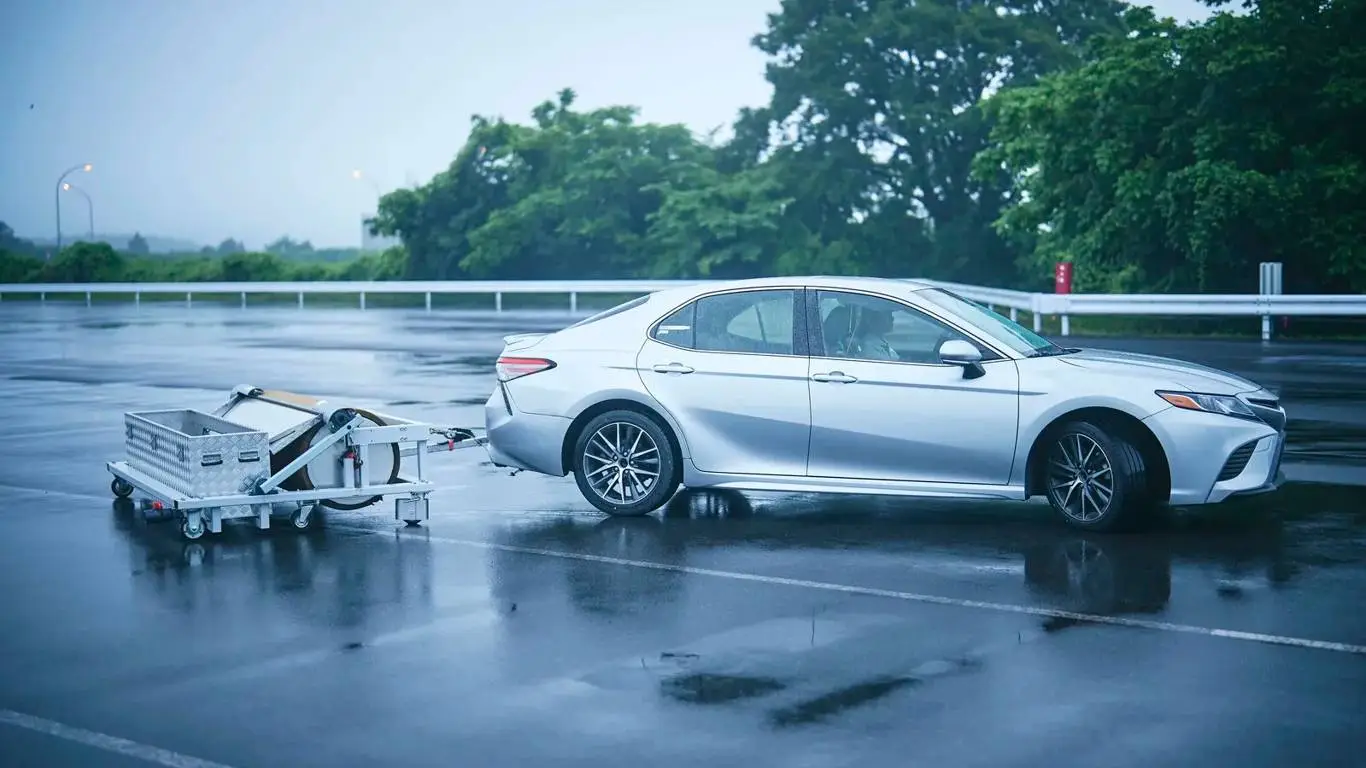
Testing Toyota’s complex automatic braking system just got faster thanks to a surprisingly simple tool — no motor, no pump, no expensive electronics. A two-meter sponge roller dries the track after rain and cuts winter waiting time from four hours to two. Over a year, the device freed up about 91 working hours.
The device was built by staff at Toyota’s Higashi-Fuji Technical Center in Japan’s Shizuoka Prefecture. On Straight No. 3, Toyota tests its Pre-Collision Safety system: the car has to recognize a mock vehicle or pedestrian and brake automatically. Getting comparable results requires a dry surface, so rain kept pushing tests to the weekend. In 2023, staff in these teams came in on days off more than three times as often as employees in other departments.
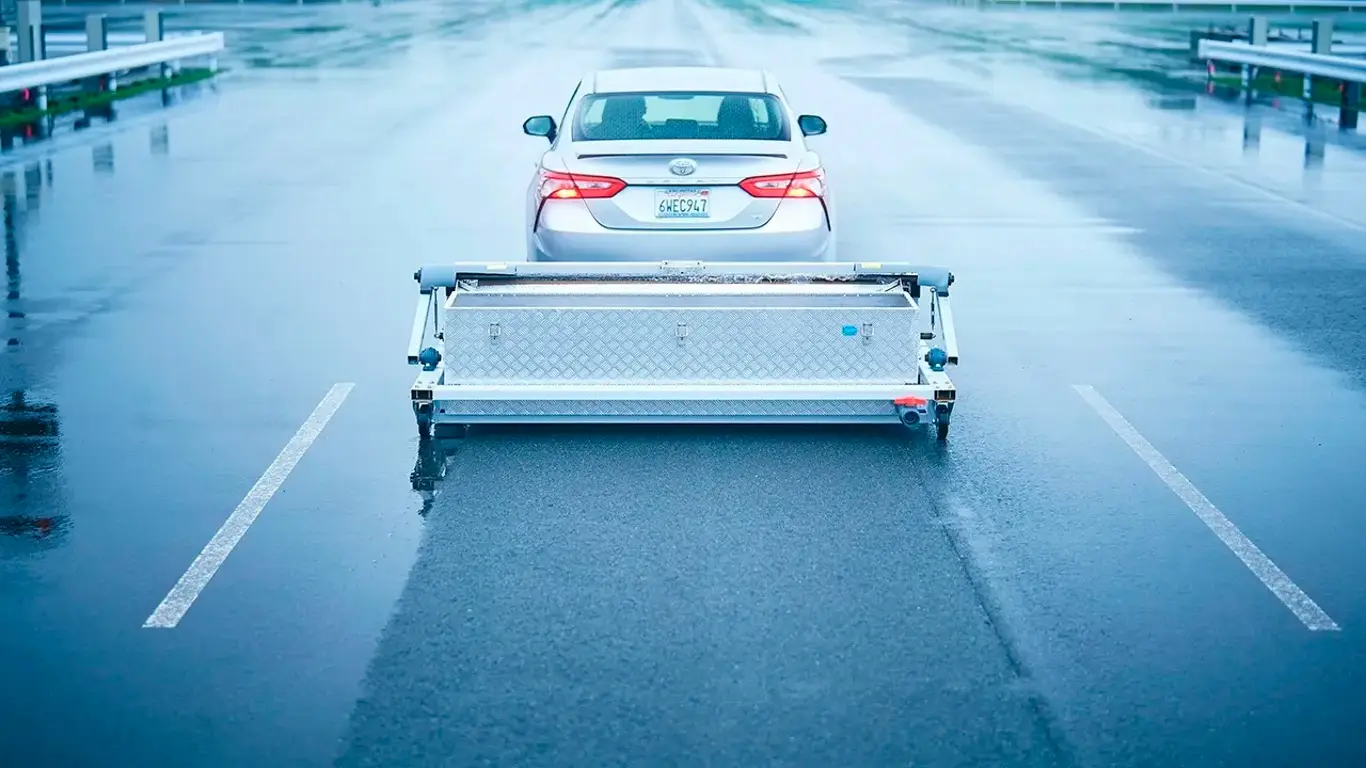
Engineers tried a road heater, an air blower, a wiper-like device and a vacuum unit. The vacuum dried fastest, but scaling it up to track size proved too costly. The roughly two-meter-wide sponge soaks up water, a rotating steel shaft wrings it out, and the tank holds around 320 liters. Drying a 3.5-meter-wide lane takes just two passes.
The prototype went through seven rounds of refinement and has been running since March 2024, about once or twice a month. On turns, a cable mechanically lifts the roller so the sponge doesn’t drag on the asphalt. 32CARS.RU previously reported why precise conditions matter so much when testing electronic safety systems.
Toyota’s story shows an unusual conflict: development of automotive electronics was held back not by a lack of computing power, but by wet asphalt. In summer, the roller cuts drying to 1–1.5 hours, and in winter it gives testers back about half of their lost time.