BMW iX3 vs iX5: why the smaller electric SUV skips the giant battery
 D.Novikov
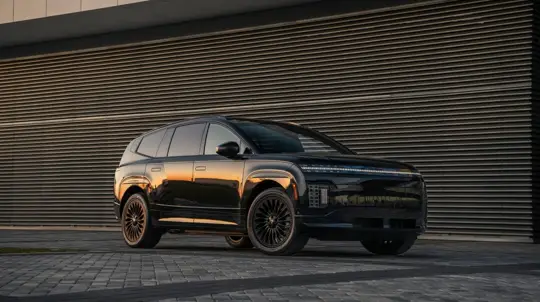
The iX5 packs BMW's largest-ever 141 kWh battery, but the iX3 sticks with 108.7 kWh — and still covers 805 km WLTP. The reason the bigger pack won't fit the smaller SUV comes down to engineering.
BMW has explained a curious difference between its two electric crossovers: the iX5’s huge battery won’t be a gift for the more compact iX3. On paper that looks like a limitation, but BMW didn’t chase maximum capacity at any cost — it went for the right balance of weight, platform and real-world range.
According to BMWBLOG, the new iX5 gets the largest battery of any production BMW EV — 141 kWh of usable capacity. In the US the same pack is quoted as 144 kWh, but that gap comes down to how the energy is measured. The iX3 makes do with less — 108.7 kWh — yet its claimed range still reaches 805 km on the WLTP cycle. That is just 40 km short of the iX5’s 845 km.
The key reason is engineering, not marketing. Both crossovers use sixth-generation battery tech, but their cylindrical cells differ: the iX5’s stand 120 mm tall, the iX3’s only 95 mm. The two cars also ride on different architectures — CLAR for the iX5, Neue Klasse for the iX3. The height gap matters too: the iX5 is 113 mm taller, so the bulky pack slots in far more naturally.
Squeezing that battery into the iX3 would be a questionable move. The European iX3 weighs 2285 kg, while the iX5 is 540 kg heavier — effectively the heaviest series-production BMW short of the armored models. A bigger pack would add range, sure, but also mass, cost and extra load on the tyres and brakes. For the owner that is no abstraction: a heavy EV chews through rubber faster, costs more in suspension repairs and feels worse on rough roads.
In the US, the iX3 with its 112.2 kWh battery is rated at up to 699 km, and the iX5 at around 700 km on BMW’s EPA-based calculations. The gap all but vanishes, because the big SUV eats its capacity advantage through weight and aerodynamic drag. It is a neat reminder that you cannot judge an EV by kWh alone: mass, body, platform, power-electronics efficiency and motorway consumption all count.
The iX3 already offers a more affordable European version with an 82.6 kWh battery and 637 km of range. That is a sensible play: not everyone needs the maximum pack, especially for city and suburban driving. Rivals such as the Mercedes EQE SUV, Audi Q6 e-tron and Volvo’s coming EVs face the same trade-off between range, price and weight rather than simply piling on capacity.
In effect, BMW is showing a new way of thinking about EVs: not every model needs the biggest battery. Sometimes the best pack is the one that doesn’t turn a crossover into an expensive, heavy suitcase on wheels.