Angelux at BIMOS 2026: a yellow two-seat eVTOL aimed at premium leisure, not urban air taxi routes
 D.Novikov / 32CARS
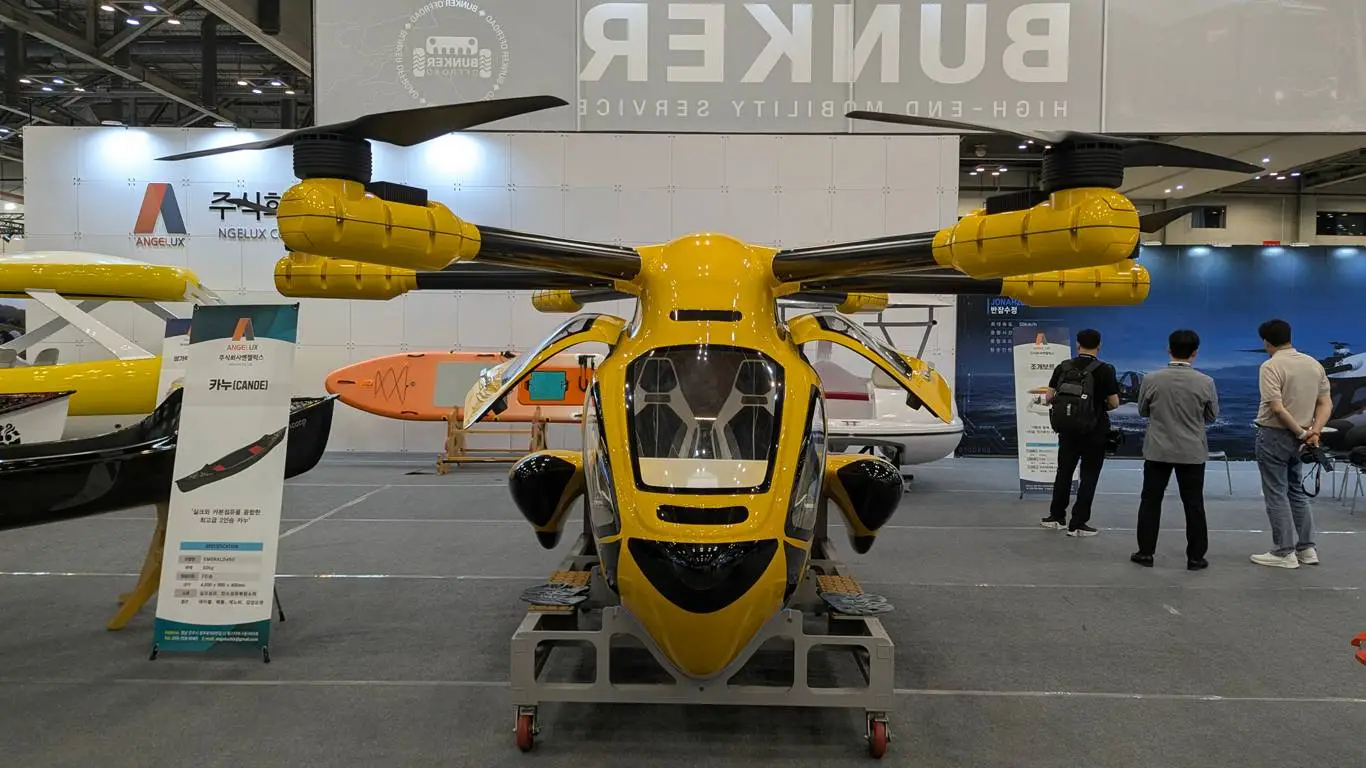
A yellow two-seat personal eVTOL by Angelux made an appearance at BIMOS 2026 in Busan, aimed at premium leisure flights rather than urban air taxi routes.
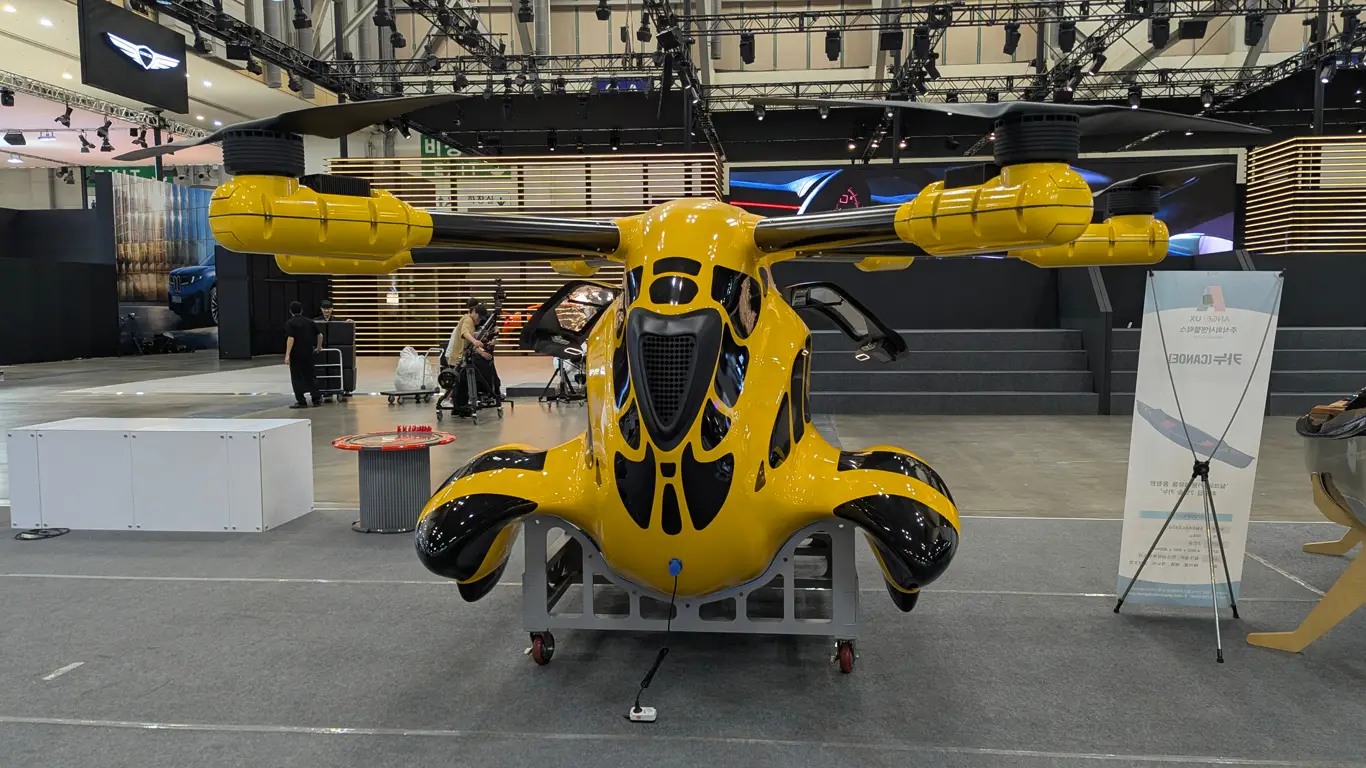
At BIMOS 2026 in Busan, among the cars, campers and boats, stood a yellow craft that is hard to place in any familiar category. It has a closed two-seat cabin, four large rotor groups, landing skids and an interior with a joystick instead of a steering wheel. Angelux is showing neither a car nor a boat, but a personal eVTOL aimed at a new space between tourism, entertainment and urban air mobility.
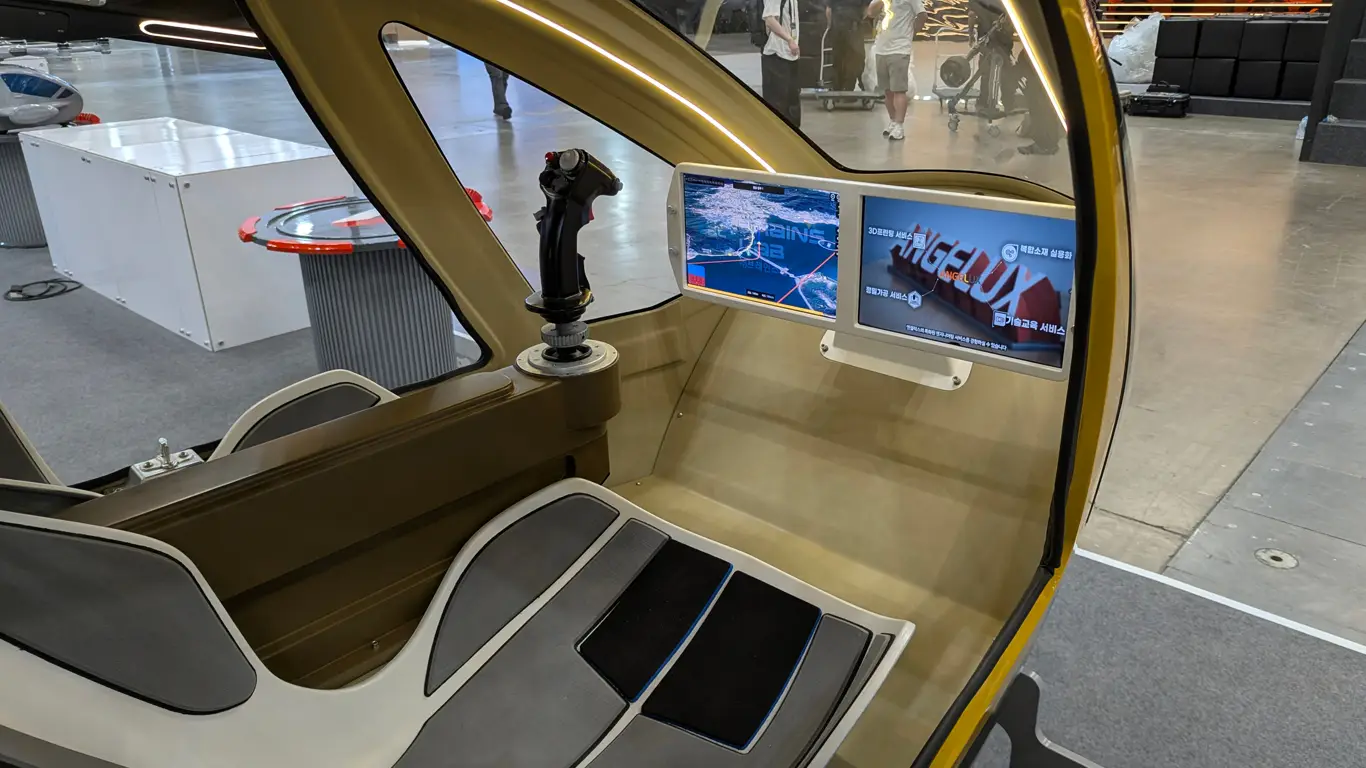
According to 32CARS, the project does not grow out of automotive logic. Right next to it are canoes, boats, SUP boards and marine gear, while screens inside the cabin show navigation graphics and Angelux service demos. That context matters: the craft looks less like a Hyundai, Kia or Tesla rival and more like an attempt to turn a premium-leisure ride into a product — lift off above the coast, hop quickly over the water, add yet another expensive scenario to yachts and glamping.
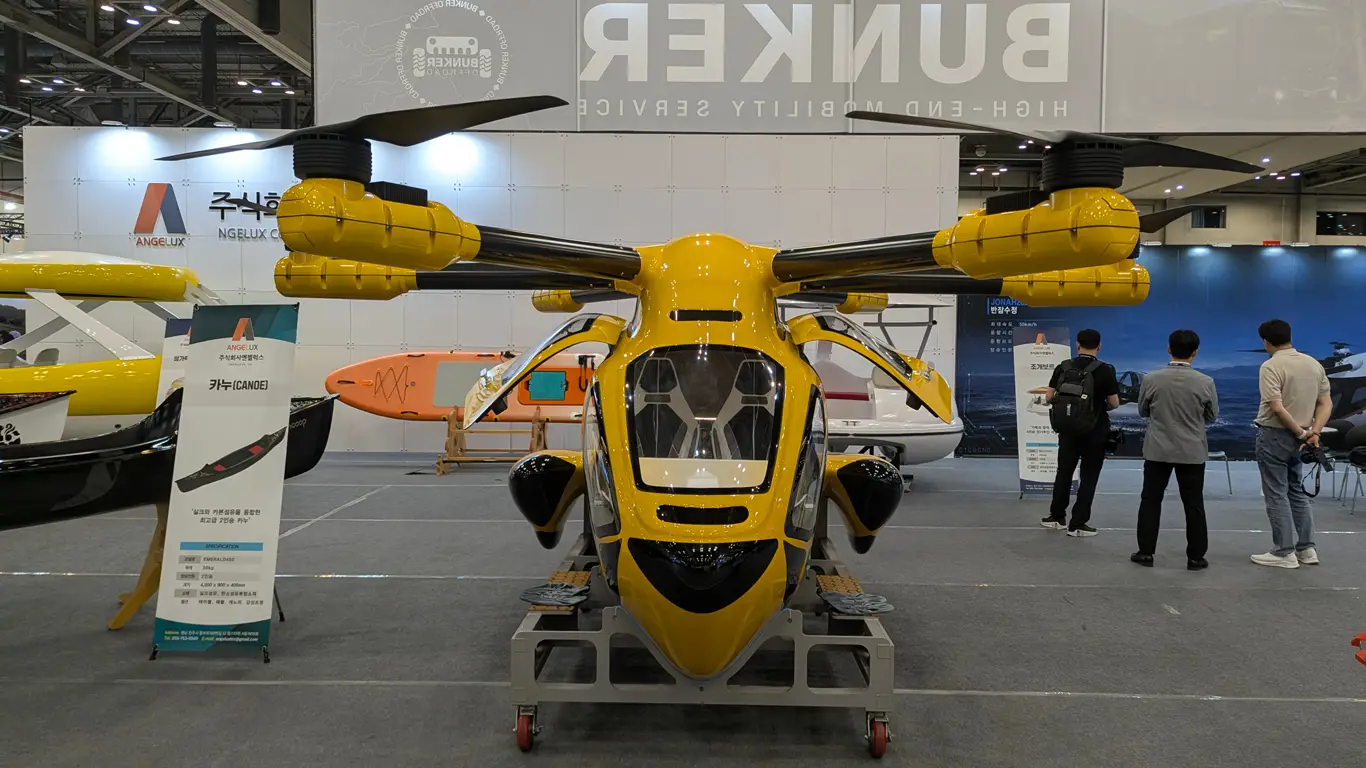
The cabin is built for two. Inside — two rigid seats, panoramic glazing, side accent lighting, two screens in front of the passengers and a central control stick of aviation type. Unlike open personal aircraft such as the Jetson ONE, the focus here is not solo extreme flying but a closed cabin and the feeling of a small aerial shuttle. Yet a true air-taxi format on the Joby or Archer level is still out of reach: those bet on regular routes, certification, capacity and operating economics.
The strength of Angelux is the visual simplicity of the idea. A yellow body, big rotors, an easy-to-grasp boarding layout, a minimum of aviation “scariness”. For a tourist that matters: the craft has to look not like an experimental drone but like transport you can step into without feeling like a test subject. The weakness sits in the same place. Without clear figures on range, speed, battery, certification and price, the project remains a trade-show promise rather than a product you can stack up against a helicopter, a speedboat or a premium transfer.
The eVTOL market has stopped being pure fantasy, but it is split into different tiers. China’s EHang EH216-S has already secured a type certificate from the CAAC, Joby and Archer are working toward urban air taxis with one pilot and four passengers, and smaller personal craft sell mostly emotion and approachable controls. Angelux is closer to that third group: not moving thousands of people on a schedule, but offering an expensive, short, memorable experience.
For a buyer or operator the question will not be “does it fly nicely”. What matters: how much an operating hour costs, who maintains the batteries and rotor groups, where it will be allowed to take off, how over-water safety is handled and who carries responsibility for the passenger. If those questions get answered, a craft like this has a niche in resort regions, on islands and at premium leisure parks. If not — it will remain a striking yellow shape on a show-floor carpet.
BIMOS is gradually turning from an auto show into a showcase of everything that can move: electric cars, robots, campers, boats, UAM. Angelux looks strange in this lineup, yet it fits. The future of mobility sometimes starts not with a sedan or a crossover, but with a thing visitors look at and ask: “Is this actually something you can drive?”