Mazda Mobile Carbon Capture: 804 grams of CO2 caught and stored over 24 hours of racing
 newsroom.mazda.com
Mazda has run its onboard CO2 capture system for the first time as a closed loop—adsorption, desorption and storage—during the Fuji 24 Hours. The result is 9.6 times better than the November 2025 test.
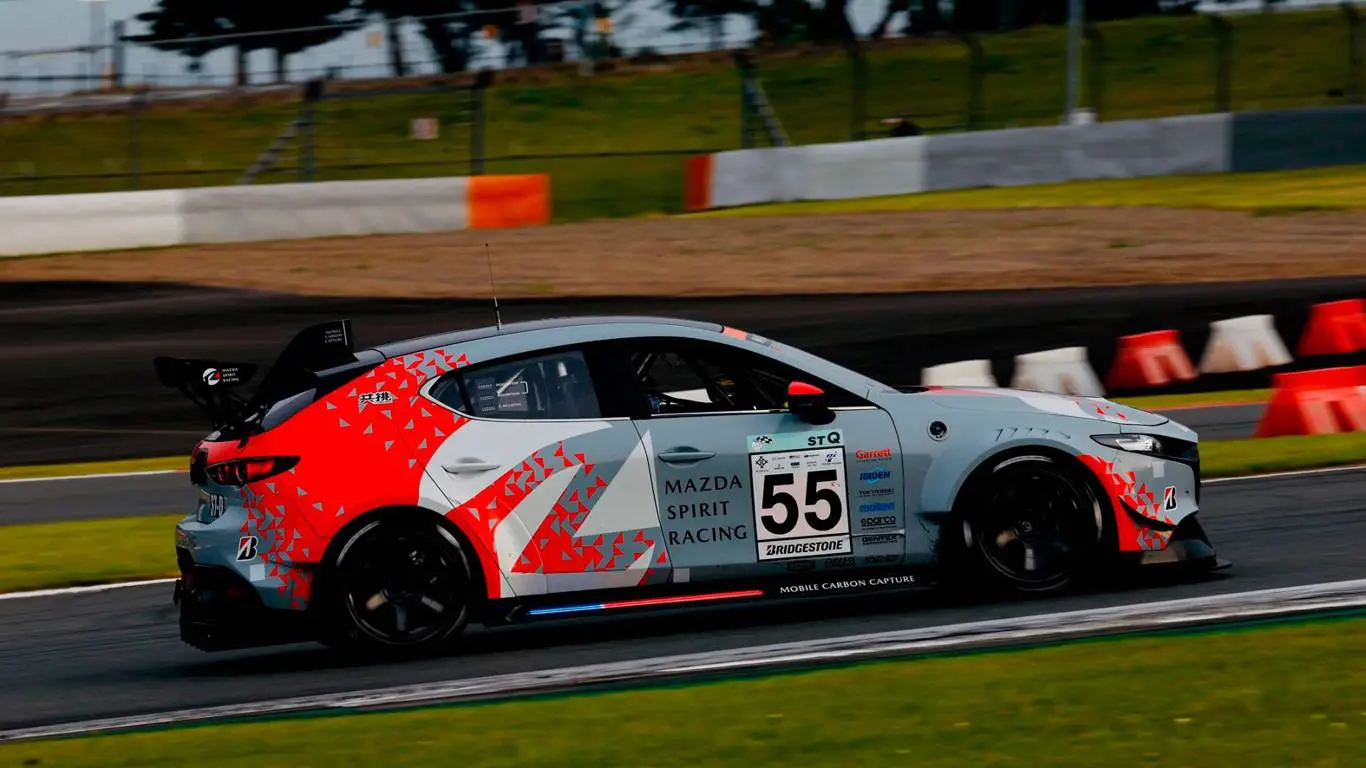
Mazda has taken the next step in what is arguably its most unconventional environmental project. The onboard Mazda Mobile Carbon Capture system, which traps CO2 straight from a combustion engine’s exhaust, has run a full capture cycle during an actual race for the first time. According to the brand’s press service, the car captured and stored 804 grams of CO2 over 24 hours — 9.6 times more than in its first trial six months earlier.
The experiment took place on June 5–7, 2026 at the Fuji 24 Hours, the third round of the Super Taikyu season. The test car was once again the Mazda Spirit Racing 3 Future Concept No. 55, running on HVO biodiesel — a carbon-neutral fuel that, as 32CARS reported earlier, is already in commercial use across Europe. The system’s first public outing was back in November 2025, but at that point the unit could only adsorb CO2, picking up just 84 grams.
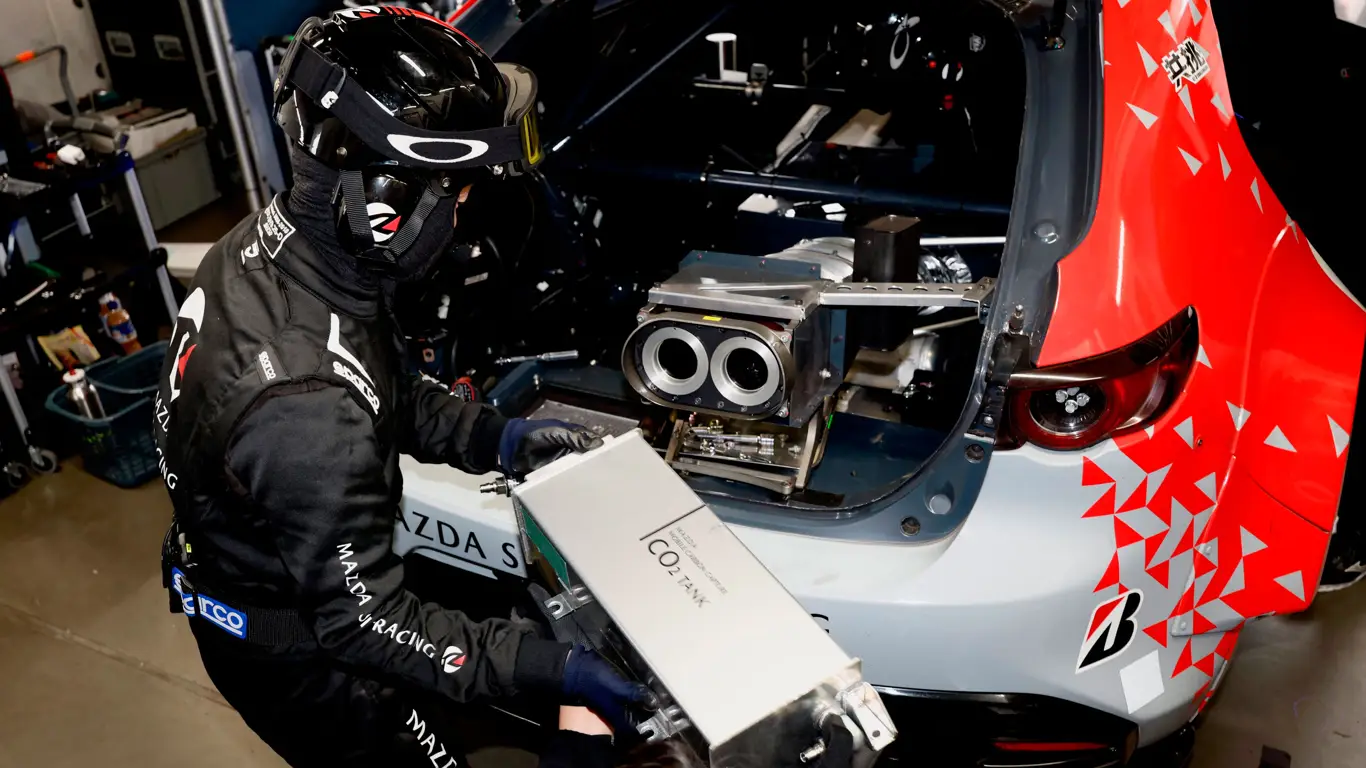
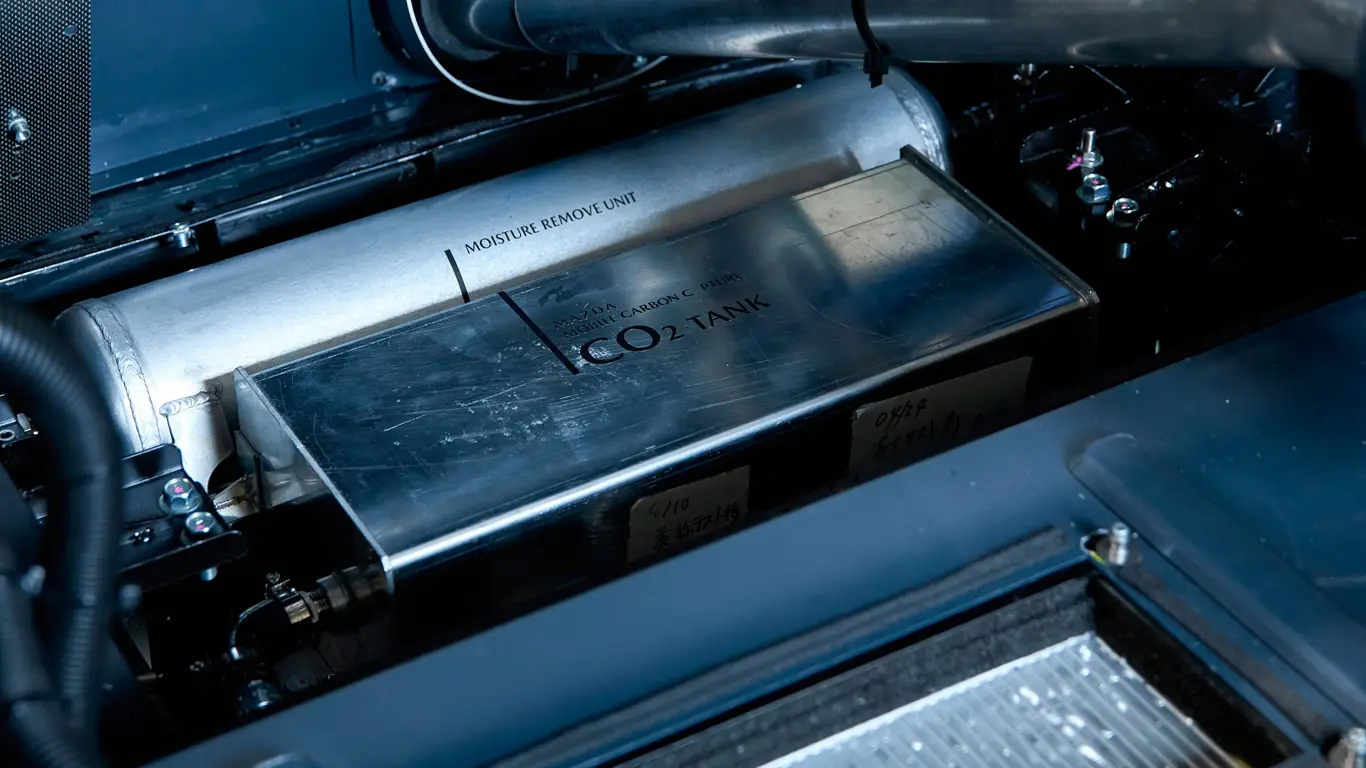
The key difference this time is the addition of a desorption stage and a dedicated onboard tank. Zeolite, the porous mineral at the heart of the system, releases CO2 when heated — and Mazda uses exhaust heat for exactly that. From there an electric compressor pushes the gas into the storage tank. The result is a closed process: from the moment CO2 leaves the engine to the moment it sits in the buffer, everything happens on the car.
Mazda also noted that, in the moment, the combined effect of HVO plus the captured CO2 temporarily exceeded the recovery target the company assumes for typical use of its production cars. In other words, a regular vehicle on a combustion cycle briefly looked genuinely carbon-negative — even if only for short stretches.
The next ambition is bigger. Mazda wants to achieve short-term carbon negativity in racing conditions during Round 7 of the Super Taikyu Series in November 2026. The longer view is unchanged: by 2035, mobility where the more you drive, the more CO2 leaves the atmosphere.