Jeep Cherokee Hybrid: how Toyota DNA ended up in Jeep's first conventional hybrid
 media.stellantis.com
Jeep's first non-plug-in hybrid uses a planetary two-motor eCVT from BluENexus — the Aisin-Denso joint venture with Toyota inside.
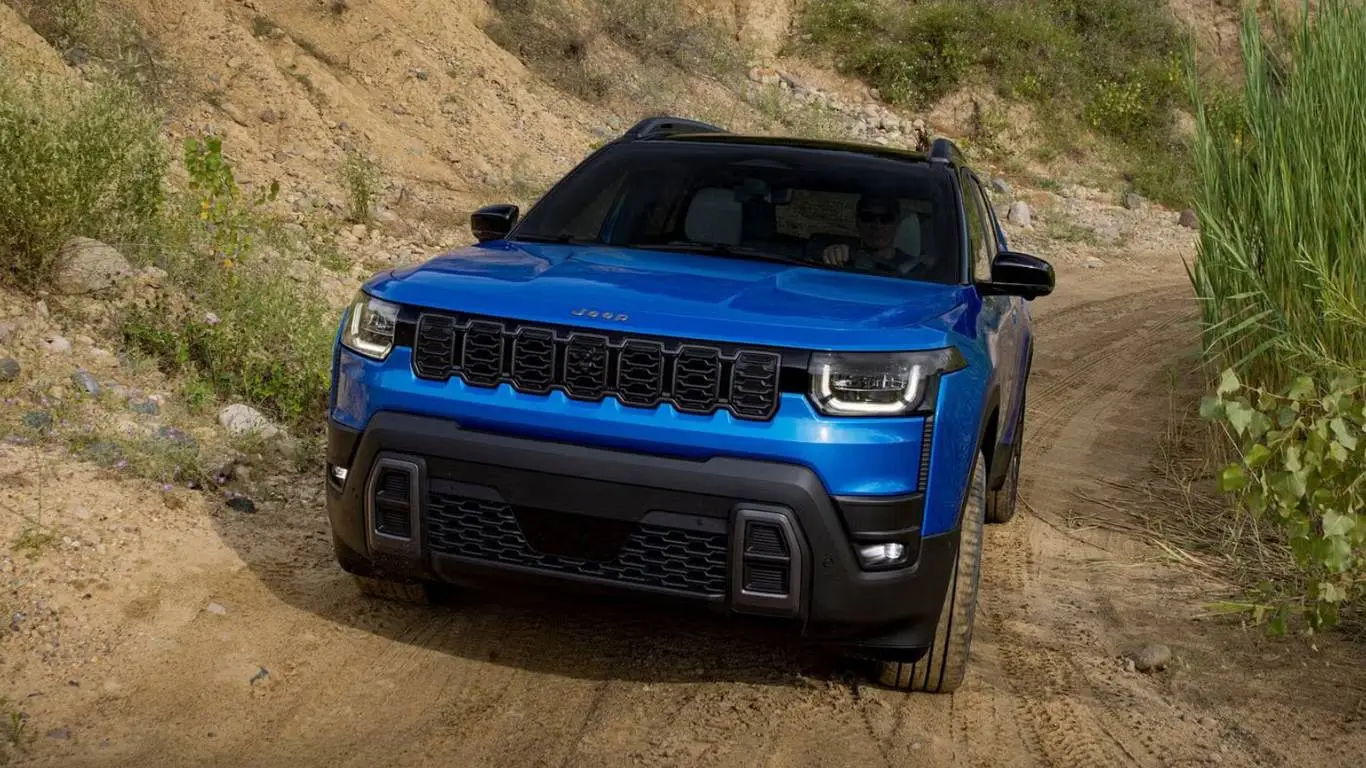
The Jeep Cherokee is back in an unusual role: it’s the brand’s first conventional hybrid that doesn’t need to be plugged in. And the real story isn’t the styling — it’s the hardware. The new Cherokee runs a hybrid system with deep Japanese roots, mechanically very close to what Toyota has been doing for years.
For Jeep, this is a meaningful pivot. The brand already had the plug-in Wrangler 4xe, but a traditional self-charging hybrid is new territory. The crossover delivers 210 hp and 230 lb-ft of torque, with EPA-rated fuel economy of around 39 mpg city, 35 mpg highway and 37 mpg combined. For a Jeep without a plug, that’s an impressive showing.
The powertrain is a patchwork of global components. The 1.6-liter turbo from the Prince engine family previously powered BMW, Mini and PSA models, but for North America it was retuned in software, cooling and calibration. Both the engine and the hybrid module are assembled at Stellantis’ Dundee plant in Michigan, while final Cherokee assembly happens in Toluca, Mexico.
The most interesting part is the BluENexus hybrid hardware. BluENexus is a joint venture between Aisin and Denso (45% each), with Toyota directly holding the remaining 10%. Both Aisin and Denso are themselves part of the Toyota Group, so the Japanese fingerprints on this system are unmistakable. The Cherokee uses an eCVT not with a belt like a conventional CVT, but with a planetary gearset and two motor-generators. One handles power generation and torque routing, while the other propels the vehicle on electricity and recovers energy under braking.
With enough battery charge, the Cherokee can run on electricity alone up to roughly 62 mph for short stretches. In the city this translates to smooth, quiet running and real fuel savings — testers have managed to hit the claimed 39 mpg figure, and careful driving can push it even higher.
Jeep layered its own off-road logic on top. Unlike the Toyota RAV4 Hybrid, which often drives its rear axle with a separate electric motor, the Cherokee uses a mechanical driveshaft and a disconnecting rear axle. The setup may sacrifice a sliver of efficiency, but it’s far more credible off-pavement. The system disconnects above about 25 mph to save fuel.
Ground clearance is around 8 inches, with approach and departure angles of 19.6 and 29.4 degrees. This isn’t an extreme Wrangler, but for a family hybrid crossover the spec sheet is genuinely strong. Jeep has already shown the Cherokee Upland concept with 32-inch Falken Wildpeak tires and a tougher off-road look — possibly a preview of a future Trailhawk.
Pricing wasn’t in the source material, and that’s the main open question. Technically, Jeep has pulled off a rare combination: a fuel-efficient hybrid, Japanese transmission logic and a real mechanical 4x4. Now the only thing left to learn is what the buyer will be asked to pay.