Ferrari and Hydrogen: A Deformable Tank That Could Save the Combustion Engine
 uspto.gov
Maranello is exploring a flexible hydrogen storage system that could keep the combustion engine alive in future Ferraris — without going fully electric.
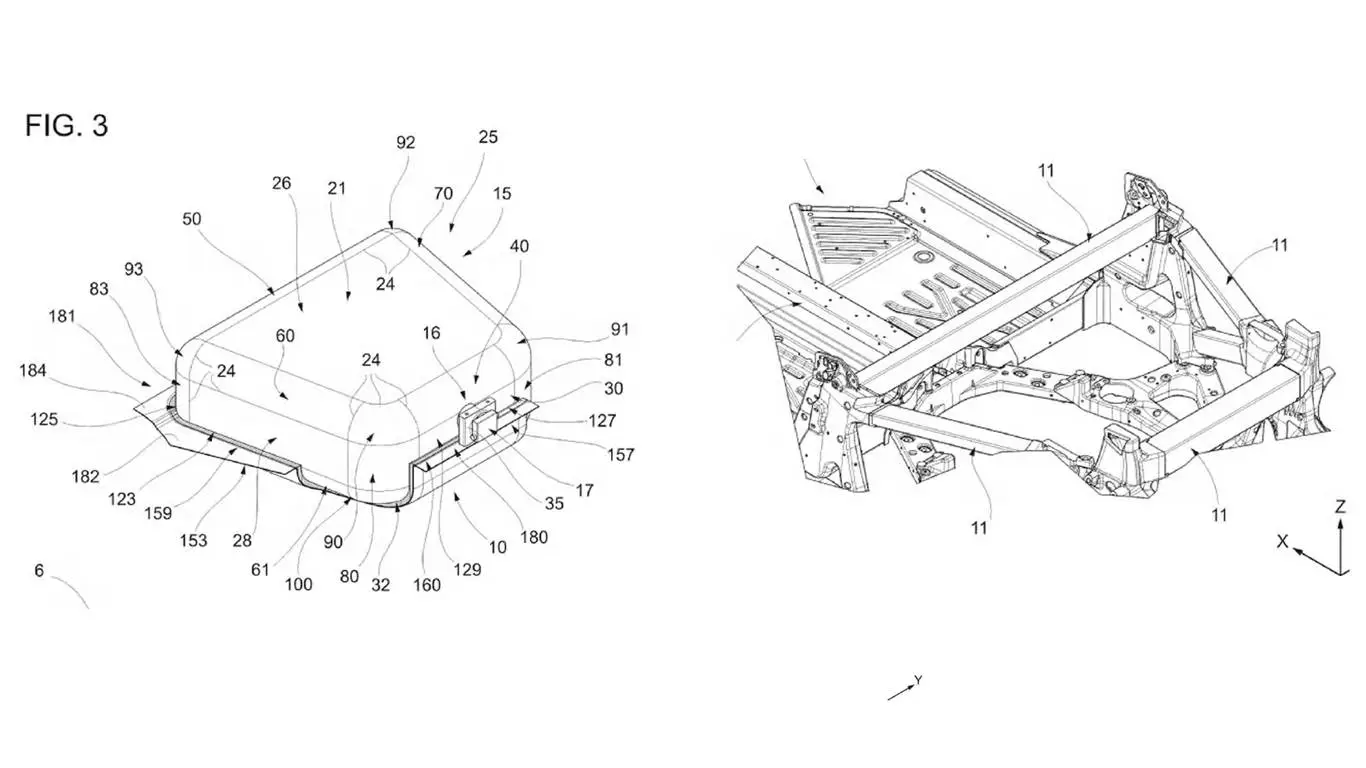
Ferrari is still looking for a path where its sports cars don’t have to go fully electric. A fresh patent from the marque describes an unusual hydrogen storage system — another signal that Maranello is seriously studying both hydrogen combustion and fuel cells.
A standard automotive hydrogen tank is a large, rigid cylinder designed to handle enormous pressure. In the Toyota Mirai, for example, hydrogen is stored at around 700 bar. Ferrari proposes a different approach: a deformable vessel that can expand and contract depending on the amount of fuel inside, while staying sealed and withstanding the same pressure.
Conceptually, the design resembles a tough flexible bag inside a rigid frame. The most critical point is the filler neck and the hydrogen supply duct. If that section moves with the tank walls, the joints face cyclic loads — and at these pressures, that becomes a serious safety risk. The patent describes a solution that fixes the supply fitting in place and reduces the risk of damage as the vessel deforms.
There’s an inconvenient detail for Ferrari fans, though: in the drawings, the tank sits high up, in the zone where a mid-engine sports car normally houses the engine bay or leaves room for luggage. That hints a hydrogen Ferrari with this layout would be a front-engined grand tourer rather than a classic mid-engined supercar. That said, the current 12Cilindri is already officially a front mid-engine GT, so this isn’t a conceptual revolution — just a more pragmatic packaging choice. And if fuel cells are the route, the powertrain can be distributed differently across the chassis.
By mass, hydrogen isn’t as scary as it sounds. The Mirai carries around 5 kg of hydrogen for roughly 500 km of range, and each tank weighs about 43 kg. For comparison, the Ferrari 12Cilindri’s 92-litre fuel tank, brimmed with petrol and including the plastic shell, comes in at about 90 kg. So a high-mounted tank hurts packaging, but it doesn’t necessarily wreck weight distribution the way a heavy traction battery would.
The open question is whether the patent will ever reach a production car. Ferrari has filed hydrogen-related patents before — for fuel cells, for direct combustion, and even for an exotic “upside-down” inline-six. But for now this is not a promise of a production model, just an engineering backup plan in case green hydrogen becomes a real alternative to petrol and batteries.
For Ferrari, hydrogen matters not as a trend but as a chance to keep the internal combustion engine as part of the car’s character. An electric motor can deliver speed, but the sound, vibration and mechanical drama still mean more to the brand’s customers than dry numbers on a power figure.