Volkswagen Golf TDI is out in Britain: petrol and hybrids take the wheel
 D.Novikov
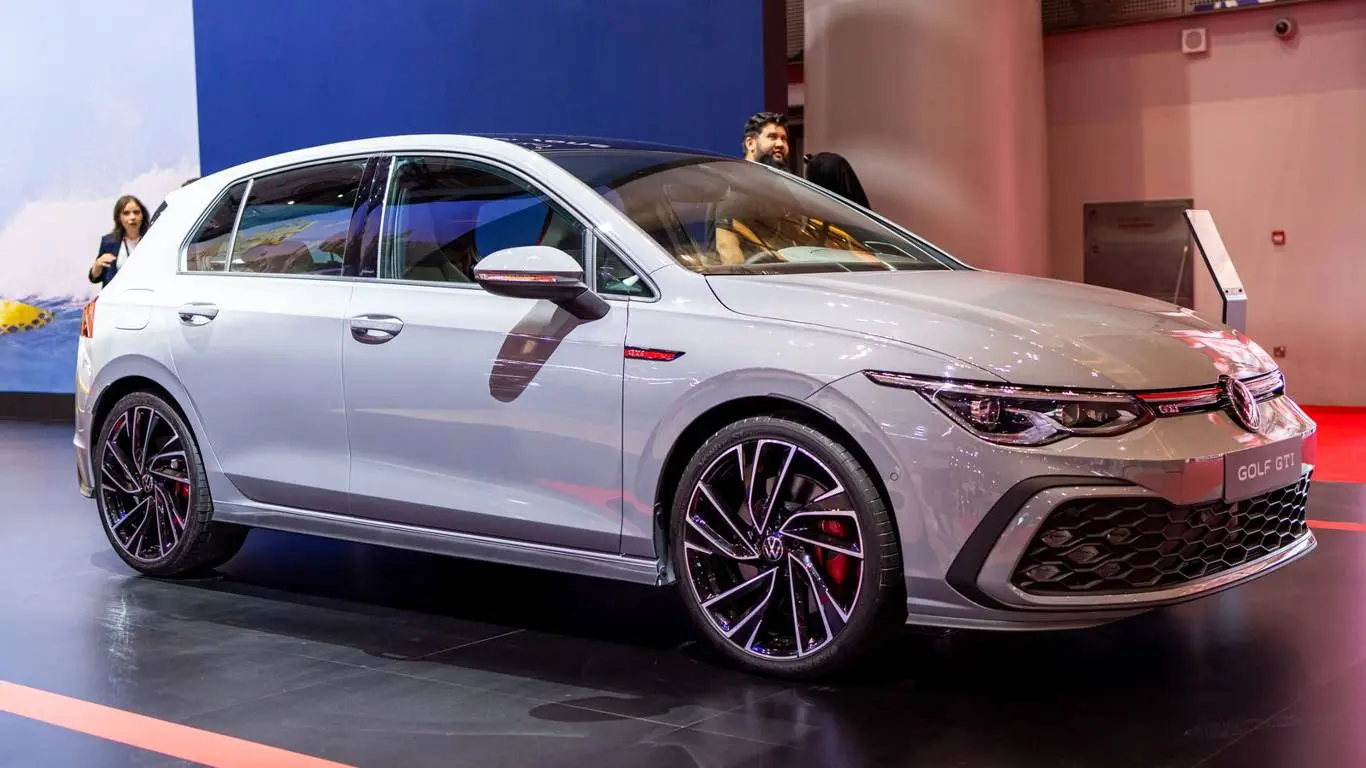
Volkswagen has quietly dropped the diesel Golf from its UK price list. Nearly 50 years after the first oil-burning Mk1, TDI is stepping aside for petrol and future hybrid variants.
Volkswagen has pulled the diesel Golf from its British line-up. Almost 50 years ago, in 1976, the Golf was one of the first mass-market cars to get a diesel engine — noisy, frugal, very much a “workhorse”. That chapter is now closed. No farewell edition, no fanfare. It has simply disappeared from the price list.
Volkswagen UK’s wording is dry: the company “constantly reviews demand” and has decided to focus on petrol and future hybrid powertrains. Behind that statement is some unpleasant arithmetic for TDI. From January to May diesel cars claimed just 4.8% of the British market, with sales down another 7% to 44,449 units. For the Golf itself, diesels accounted for only 5.5% of UK sales this year. For a car that in 2015 was over 80% diesel in company fleets, this is not a slump. This is the near-disappearance of a category.
The irony is sharp. It was the diesel Golf that spent decades teaching buyers that a compact hatchback could be long-legged, economical and tax-efficient. Then Volkswagen’s 2015 diesel scandal became one of the moments after which trust in the technology started to crumble. Not immediately. Diesels held on for a long time thanks to company fleets, big crossovers and high-mileage drivers. But the mainstream hatchback is no longer their territory.
On the continent, the diesel Golf is sticking around: in Germany and Italy the logic still adds up, especially for autobahn commutes and heavy annual mileage. Britain has moved faster. High taxes, environmental pressure, a fuel-price spike after the US–Iran conflict — Autocar notes that diesel climbed above £1.80 per litre. At that point the efficient engine stops being a simple answer: it needs explaining, and mainstream buyers do not like explanations.
Who is keeping diesel afloat? Not Golf. Land Rover. According to SMMT, JLR accounted for 43% of UK diesel car sales in the first five months of the year, and the six best-selling diesel models in the country all belong to it. The Defender with its inline-six lives in a different reality: long range, towing, heavy vehicle, long trips. The plug-in hybrid is more powerful on paper, but once its 19.2 kWh battery runs flat after the claimed 48 km, the two-litre petrol engine is left to do all the pulling. Here diesel does not yet look like an old man.
Hybrids are closing in, though. So are EVs, particularly at the top: the Range Rover and Range Rover Sport EV with a 118 kWh battery, the BMW iX5 with roughly 140 kWh, fast-charging under 15 minutes — these are no longer city toys. But while the expensive EV is still learning to be a diesel for long distances, the diesel itself is retreating into niches: big SUVs, vans, commercial vehicles, very high-mileage cars.
The Golf did not go first because the TDI became bad. It went because compact-car buyers no longer want to argue with taxes, fuel and diesel’s reputation. Once Golf leaves the game, diesel stops being the norm — and becomes a choice for those who know exactly why they need it.