Donut Battery unveiled: production-ready solid-state pack with 5-minute charging and 400 W/kg
 Donut Lab
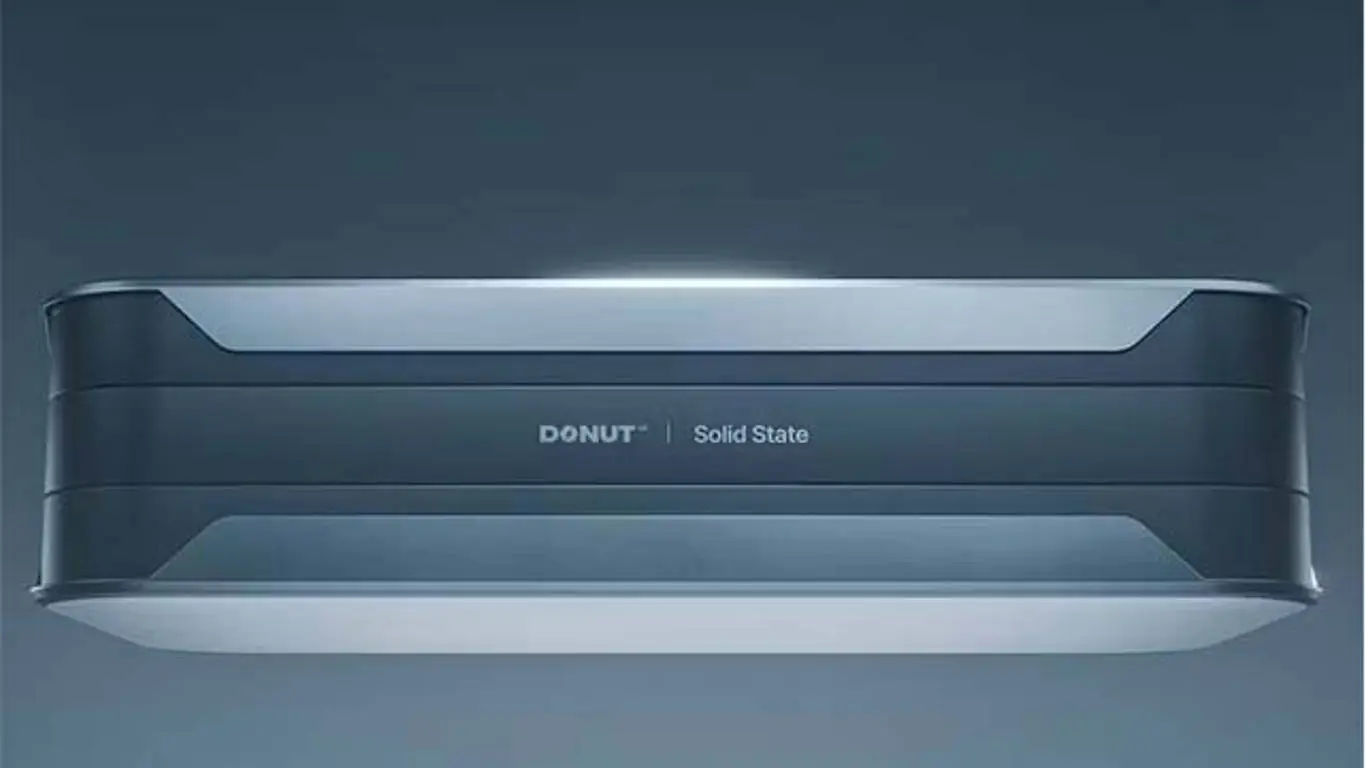
Donut Lab unveils the Donut Battery, a production-ready solid-state pack boasting 400 W/kg, 0-100% in 5 minutes, enhanced safety, and up to 100,000 cycles.
Donut Lab, known for its work in electric mobility and for projects that have been used by Verge Motorcycles, has unveiled the Donut Battery, a solid-state pack it describes as production-ready. The company says the technology has moved beyond lab demos and is already operating in real-world conditions rather than living on test benches.
The headline claim is a specific energy rated at 400 W/kg. Donut Lab argues this could make electric vehicles lighter, stretch driving range, and open up more freedom in packaging. An even bolder promise is a full charge from zero to 100% in five minutes, and the company stresses this would come without the usual limits such as stopping at 80% to protect the pack. If this holds up outside controlled testing, it would rewrite the charging playbook.
The company also spotlights longevity and degradation. It states the battery tolerates safe, regular full discharges and that capacity fade over time is said to be virtually absent. The claimed ceiling for cycle life is up to 100,000 charge–discharge cycles—an extraordinarily ambitious figure that, on paper, dwarfs what’s typical for mass-market lithium-ion.
On safety, Donut Lab points to the lack of a flammable liquid electrolyte and says the design prevents thermal runaway. It also mentions protection against issues such as metallic dendrite formation and asserts there is no risk of ignition even under extreme conditions. As an illustration, the company cites tests in which the battery reportedly retains over 99% capacity at minus 30 degrees and continues to operate without degradation or signs of ignition at temperatures above 100 degrees. If reproducible, these behaviors would be notable for any solid-state contender.
Donut Lab adds that it relies on widely available, “geopolitically safe” materials. A simplified architecture paired with long service life, the company believes, should deliver a lower overall cost than conventional lithium-ion solutions. Flexibility is another theme: they talk about producing modules in different sizes, voltages, and geometries, including structural integration—up to using the battery as part of a vehicle’s load-bearing structure. For designers, that kind of versatility can be as valuable as raw performance numbers.