How Porsche reduces battery degradation and speeds Taycan fast charging
 A. Krivonosov
How Porsche curbs battery degradation and speeds Taycan fast charging with SoH buffers, smarter cooling and cells, thermal management, plus safety tests.
Porsche has detailed the technologies it uses to slow lithium‑ion battery degradation while also shortening fast‑charge sessions. The company notes that packs inevitably experience an early capacity dip of 1–5% within the first 2–12 months. To keep the real SoH from falling as much, this effect is factored in at the factory by reserving capacity—a pragmatic buffer that helps readings stay predictable over long ownership.
The drivers of aging are clear: temperature, state of charge, age, and charging current. For extended parking, the optimal window is to keep the battery at up to 30°C and at no more than 90% charge. Porsche uses patented fast‑charge control solutions and algorithms that take owner habits into account to ease cell stress and reduce the risk of lithium plating. The advice aligns with everyday use: batteries are happiest when cool and not kept at a constant 100%.
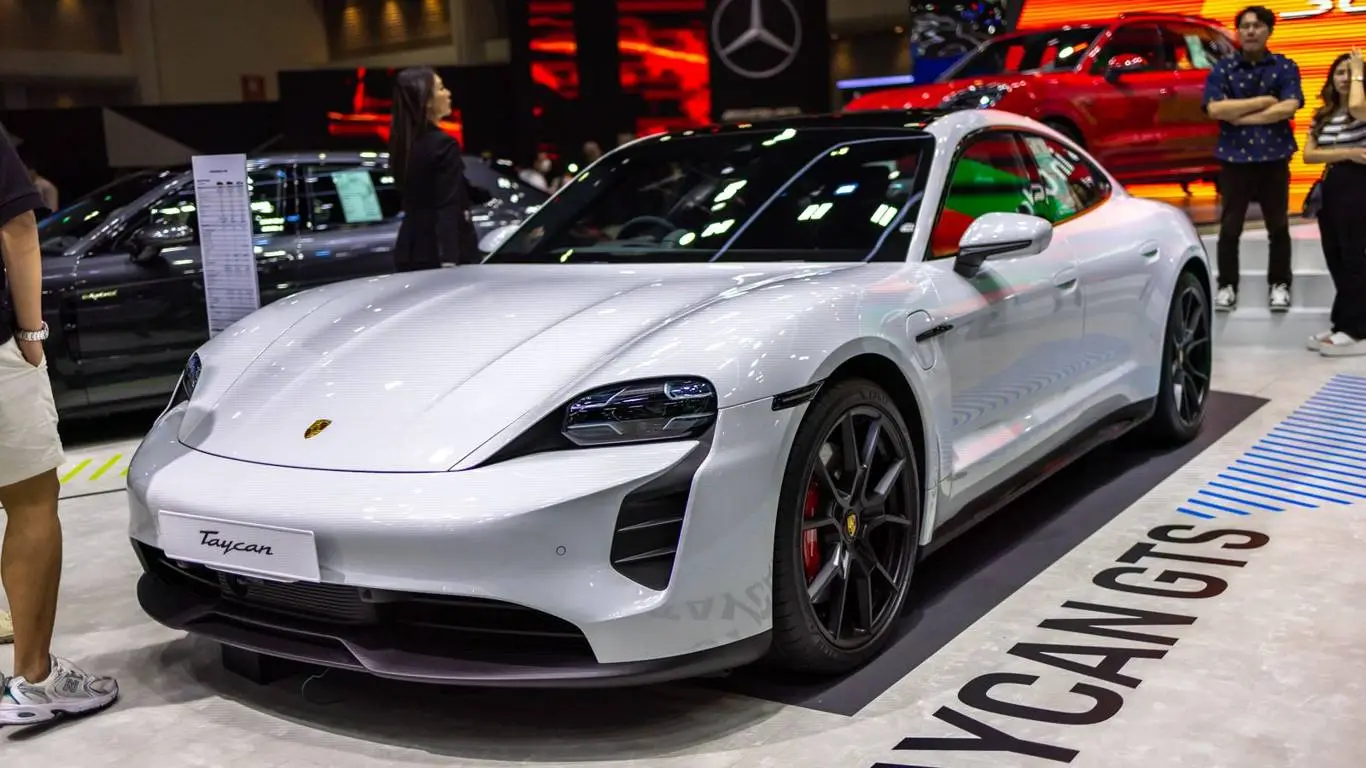
The Taycan shows how this engineering translates into measurable gains. Improved cells reduce resistance, passive cooling is added at the module level, and a new cooling plate raises heat rejection from 6 to 10 kW. As a result, a 10–80% charge drops from 21.5 minutes to 18 minutes, peak power increases from 270 to 320 kW, and the minimum temperature for starting a fast charge falls from 25°C to 15°C. Even with capacity growing from 93.4 to 105 kWh, battery mass decreases from 634 to 625 kg, while discharge current rises from 860 to 1100 A—an uptick that benefits performance. It’s the sort of incremental hardware work that drivers feel both at the charger and on the road.
Safety gets its own spotlight: testing spans roughly 1‑meter immersion, corrosion trials, and demanding crash scenarios.