Five Chevrolet concept cars that never made production
 A. Krivonosov
Explore five Chevrolet concept cars—from Testudo to Miray—that had the design, tech and performance to be legends, but never reached production. Learn more.
In the automotive world, concept cars are bold experiments that sketch out what could come next. Chevrolet has launched plenty of them, and a few might have rewritten the brand’s story—yet never got past the show stand. Here are five that had all the ingredients to become legends and even make best-of lists, if only they had reached production.
1963 Testudo
An Italian reimagining of the Corvair by Bertone. Giorgetto Giugiaro turned America’s compact into a European-style coupe with a flowing body and a fighter-jet canopy in place of doors. It turned heads in Geneva, but the end of the Corvair program erased any chance of a follow-through.
1976 Aerovette
Almost a rotary Corvette. It began with two- and four-rotor versions before pivoting to a V8. A long body, gullwing doors and a distinctly European attitude set the tone. The project was seen as a contender for the future C4, but GM, wary of weak sales, shelved it.
1987 Express
A gas-turbine vision of a 2015 car. The turbine ran on kerosene, top speed reached 241 km/h, cameras replaced mirrors, and keyless entry was onboard—all fully functional. It looked so far ahead that it even appeared in Back to the Future Part II.
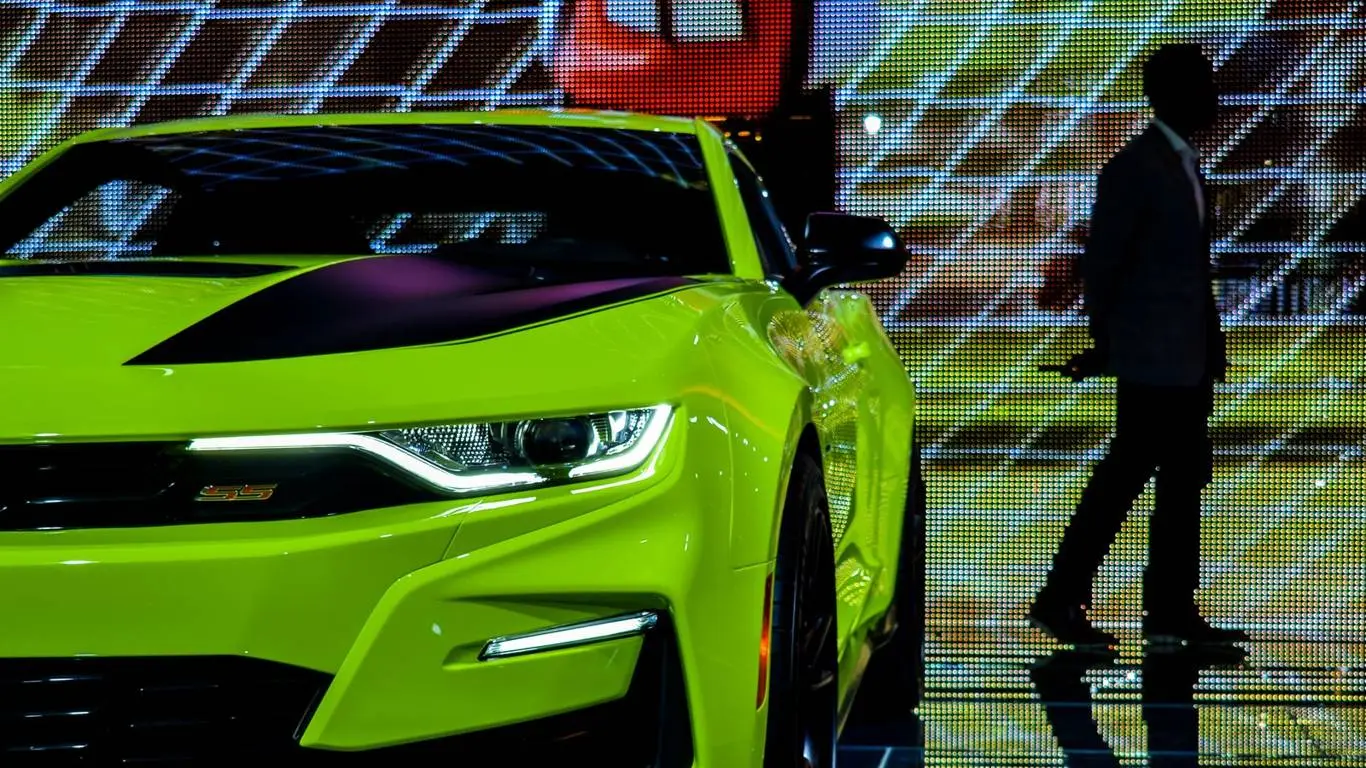
2003 Super Sport (SS)
An American answer to the BMW M5: a 430-hp V8, Corvette-sourced components and rear-wheel drive. Yet it stayed a show car, and the real SS arrived only a decade later—quietly leaving the market soon after.
2011 Miray
A Korean hybrid roadster created for Chevrolet’s 100th anniversary. Carbon construction, scissor doors, and a 1.5 turbo paired with two electric motors. The idea evolved into the Corvette E-Ray, though that model proved far more conservative.
Chevrolet has never lacked imagination; what often came up short was the nerve to back it. Several of these concepts had the makings of signature models, and it’s a shame we saw them only under show lights. Looking back, it’s hard not to shake the feeling that, had even one of them cleared the velvet rope, the brand’s trajectory might read differently.