Before Urus there was a desert monster: how Lamborghini built the Super SUV segment
 lamborghini.com
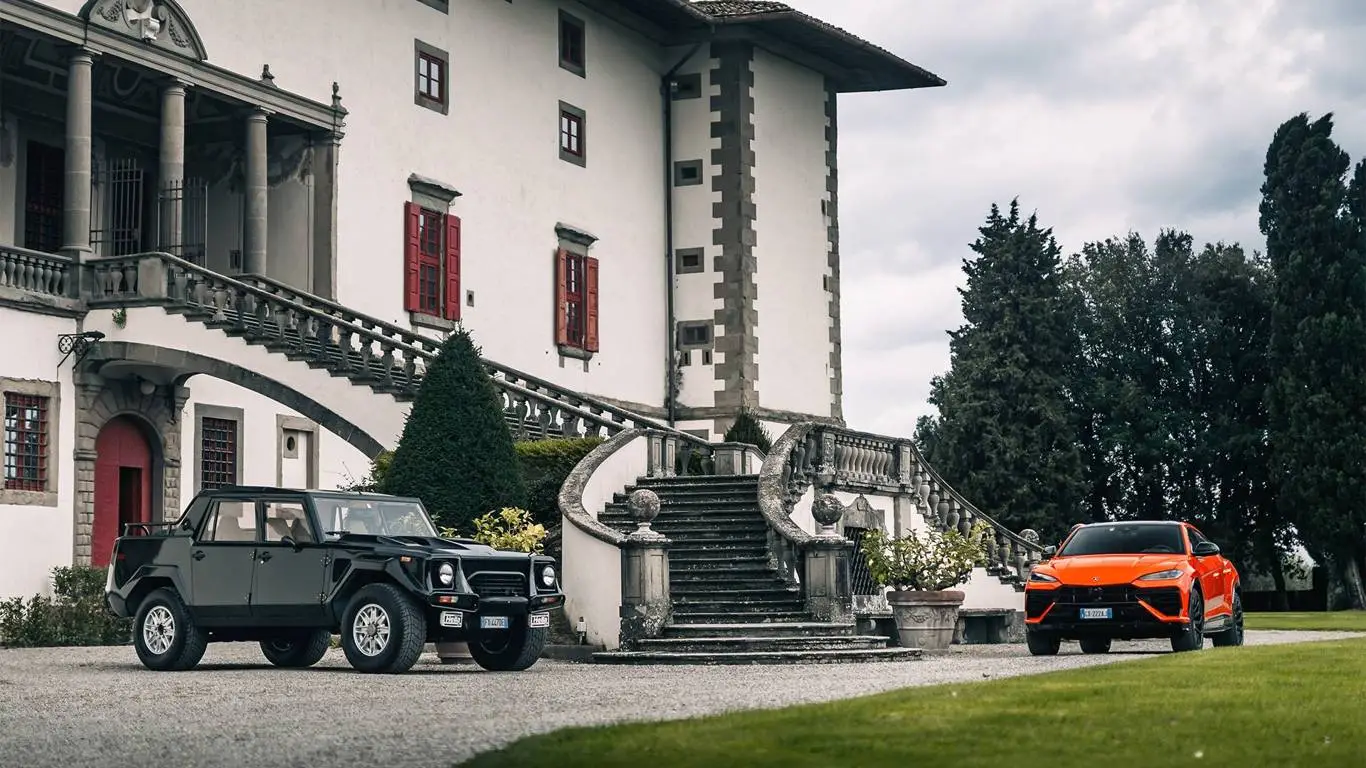
Lamborghini retraces the half-century arc from the 1977 Cheetah prototype and 5.2-litre V12 LM002 to the 800-hp Urus SE plug-in hybrid.
Lamborghini is reminding everyone that the Urus didn’t come out of nowhere. The story of the brand’s Super SUVs started almost half a century ago — with the Cheetah military prototype, a failed bid for an army contract and an engineering U-turn that eventually led to the LM002.
The Cheetah was shown at the 1977 Geneva Motor Show. Developed together with American firm MTI, it ran a rear-mounted Chrysler V8, a tubular frame and an open fibreglass body. The military contract slipped away. The next attempt, the LM001, already tried out the Countach’s V12, but the rear-engine layout proved a problem in the desert: the weight distribution wasn’t right for a serious off-roader.
The breakthrough came thanks to Giulio Alfieri. He moved the engine to the front, and the project gradually matured into the production LM002, which made its debut in 1986. Under the bonnet sat a 5.2-litre V12 from the Countach Quattrovalvole producing 450 hp, paired with a 5-speed ZF gearbox, with a kerb weight of around 2.7 tonnes. The LM002 could exceed 200 km/h and tackled sand on purpose-built Pirelli Scorpion tyres. By 1992 a total of 301 cars had been built, including the LM/American version for the US market.
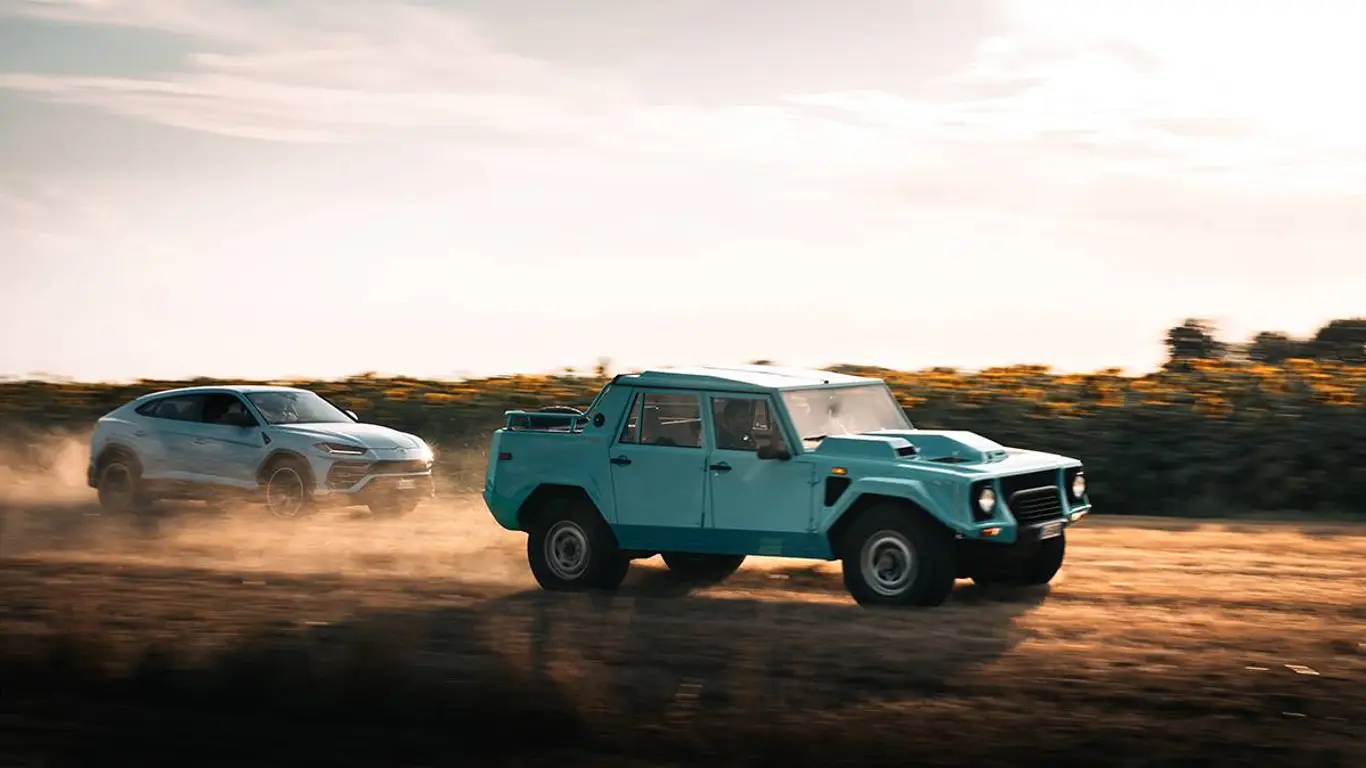
Twenty-five years later, Lamborghini returned to the Super SUV idea with the Urus. The concept appeared in 2012, the production model in 2017. Instead of a naturally aspirated V12, the brand introduced its first modern turbo engine: a 4.0-litre biturbo V8 making 650 hp and 850 Nm. The 0–100 km/h sprint took 3.6 seconds, top speed reached 305 km/h, and the carbon-ceramic brakes with 440 mm front discs were the largest fitted to any production car at launch.
The Urus wasn’t just a new model — it was an industrial leap for the marque. To build it, the Sant’Agata Bolognese plant was expanded from 80,000 to 160,000 square metres, with a new paint shop added, and the model brought Lamborghini a brand-new audience. Customers got more than an SUV wearing a supercar badge — they got a quick family car with rear-wheel steering, active anti-roll bars and Strada, Sport, Corsa, Neve, Terra, Sabbia and Ego modes.
From there the family split by character. The Urus Performante added 666 hp, swapped air for steel springs, brought more carbon fibre, an Akrapovic exhaust, Pirelli P Zero Trofeo R tyres and the production SUV record at Pikes Peak — 10:32.064. The Urus S kept the same 666 hp but played to balance: air suspension, comfort, personalisation and a more all-round delivery.
The Urus SE became the most powerful and most technologically advanced version. It’s the first plug-in hybrid in the history of the Lamborghini Super SUV: the V8 biturbo works alongside a 141 kW electric motor for a combined output of 800 hp and 950 Nm. The 0–100 km/h time drops to 3.4 seconds, top speed climbs to 312 km/h, and the 25.9 kWh battery delivers more than 60 km of pure-electric range. New hardware includes an electronic centre torque distributor and a controlled rear differential.
Exclusivity is a separate storyline. Lamborghini grows the Urus through Ad Personam, the Pearl Capsule, the Graphite Capsule, the Essenza SCV12 special, an Urus SE show car for Art Basel Miami Beach 2024 and the limited 630-unit Urus SE Tettonero capsule. There’s also a service version for the Italian Police: a Urus Performante fitted with a fridge for organ and plasma transport, a defibrillator and dedicated equipment.
For the market, the Urus has become what the LM002 never managed to be in its time: mass-produced by Lamborghini standards, profitable and instantly recognisable as a Super SUV. It doesn’t compete with ordinary crossovers but with the Bentley Bentayga, Aston Martin DBX, Ferrari Purosangue and Porsche Cayenne Turbo GT — playing at the crossroads of speed, status and everyday usability.
The LM002 was too early, too expensive and too strange. The Urus turned out to be the same kind of madness, but in the right era. And the Urus SE shows that even Lamborghini is now proving its power not just with petrol — but with a battery, too.