Renault Megane E-Tech facelift: simpler battery, longer range
 media.renault.com
Renault refreshes the Megane E-Tech Electric with a 67 kWh LFP battery, 165 kW DC charging and a cleaner two-trim lineup aimed at ID.3, MG4 and BYD Dolphin.
Renault has given the Megane E-Tech Electric a serious update almost five years into its life. The model gets more than fresh bumpers: a new LFP battery, a cleaner trim lineup and up to 500 km of WLTP range — exactly what was missing against the ID.3, MG4 and BYD Dolphin.
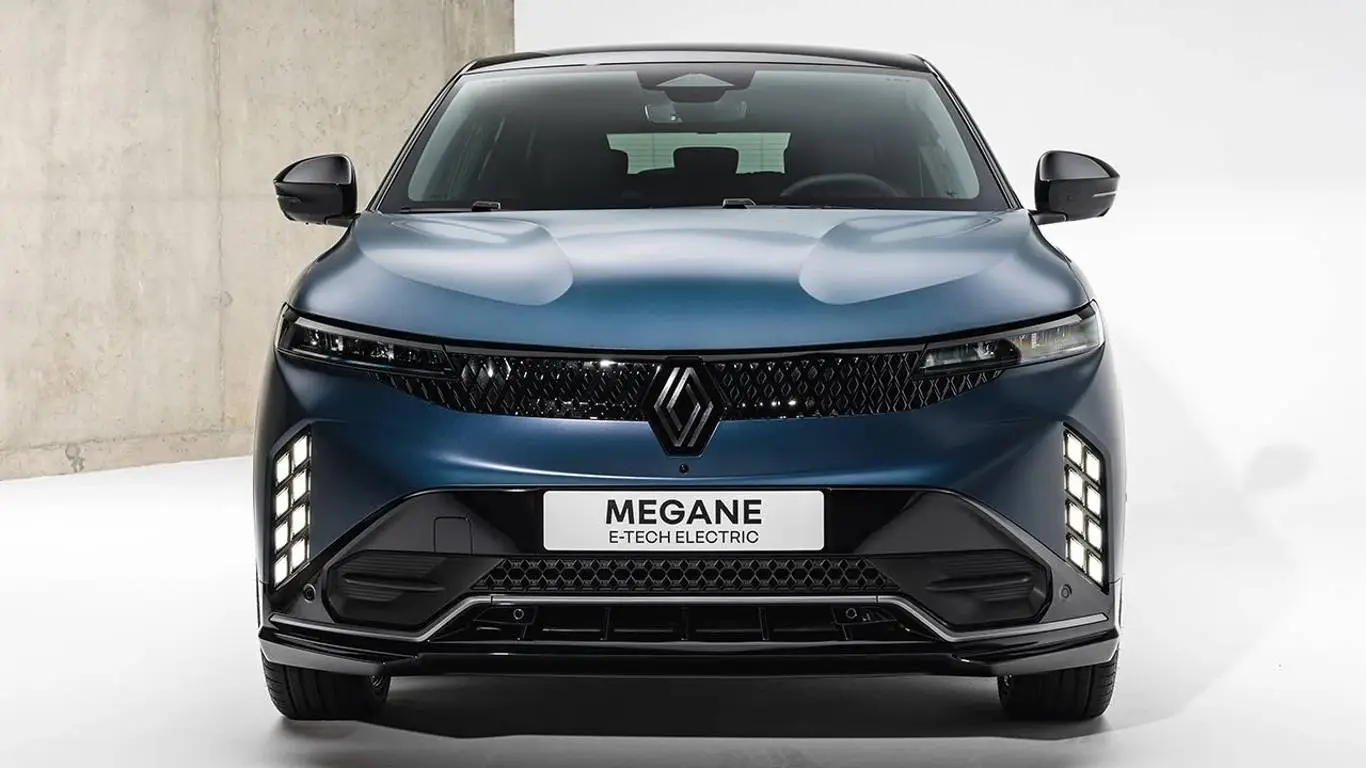
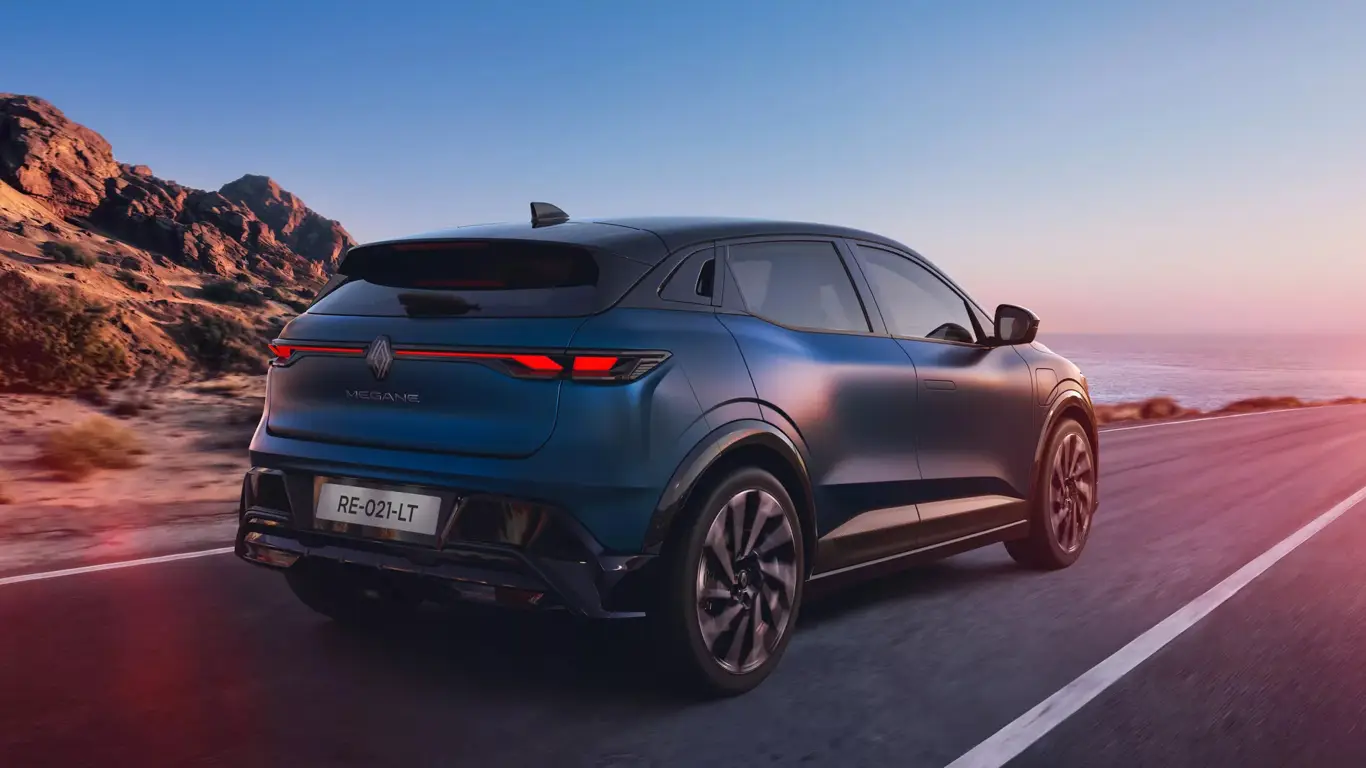
The exterior has been pulled in line with Renault’s newer design language. Almost everything up front is new except the headlights: a closed gloss-black grille, a redesigned bumper and daytime running lights made of eight diamond-shaped elements in a chequerboard pattern. The rear keeps the wide light bar, but the lamps are now 3D elements without an outer lens. Ground clearance is up by 20 mm because of the larger battery, so the Megane leans a bit more crossover, although its footprint stays compact: 4,200 mm long, 1,782 mm wide, with a 2,685 mm wheelbase. Boot capacity is 440 litres.
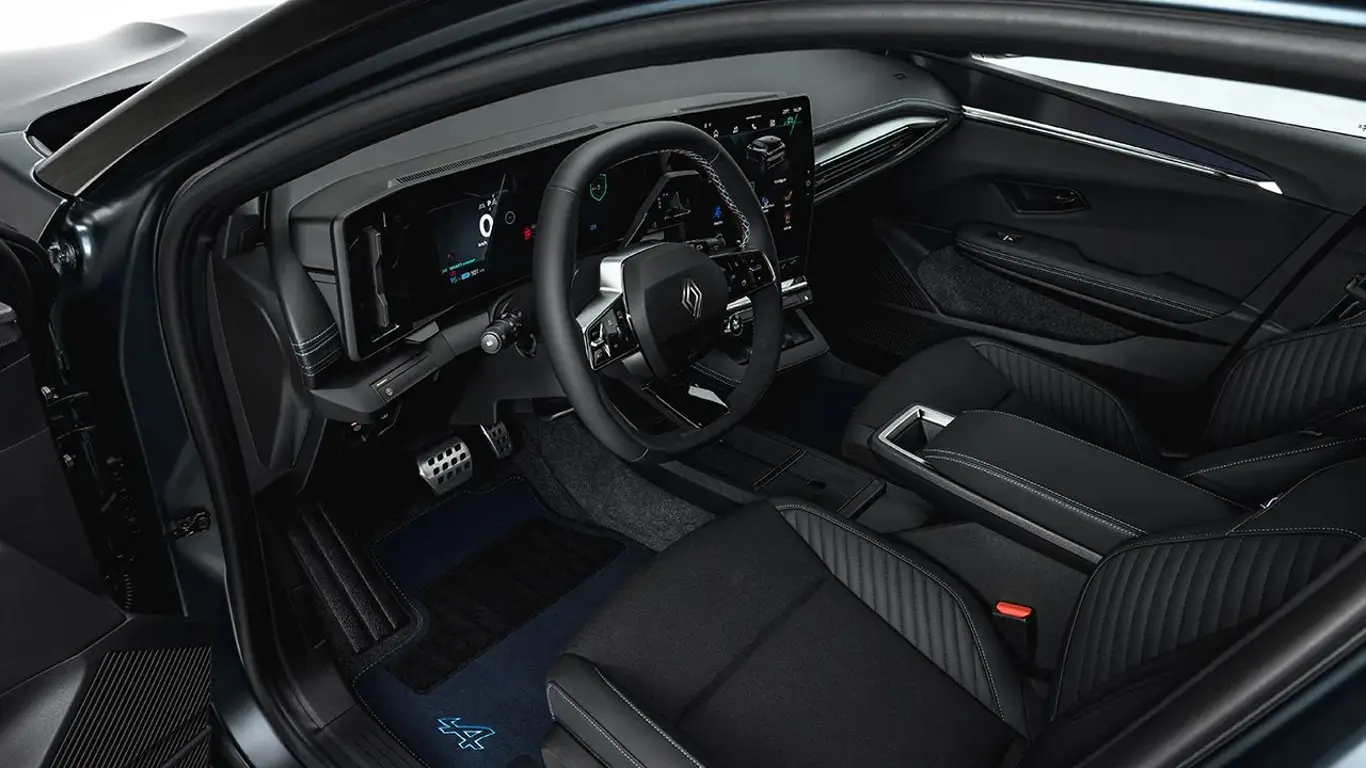
Inside there’s a 12.3-inch digital instrument cluster and a 12-inch central display. The openR multimedia system runs on Google services and Google Play, with Qi2 wireless charging, adaptive cruise control, autonomous emergency braking and a predictive eco-assistant. The range has been simplified to Techno and Esprit Alpine: fewer choices, but easier to see what you’re paying for.
According to 32CARS, the big change is under the skin. The old NMC battery is gone, replaced by a single LFP unit with 67 kWh of usable capacity. The motor delivers 218 hp and 300 Nm, drive goes to the front wheels, 0 to 100 km/h takes 7.6 seconds and top speed is 160 km/h. DC charging tops out at 165 kW: 15 to 80 per cent should take about 24 minutes. AC charging is 11 kW as standard, 22 kW optional. One Pedal, V2L and V2G are all part of the package.
For the Megane, LFP is more than a chemistry swap. These batteries are usually cheaper, handle frequent full charges more calmly and suit mass-market EVs where buyers care about longevity, price and simplicity. Energy density is lower, sure, but 500 km WLTP is enough to stop looking weaker than the competition.
The Megane E-Tech is built in France: the car and battery in Douai, the motor in Cléon. Sales start before the end of the year, with pricing still to come. If Renault holds the start close to the current €39,200, the updated Megane won’t be the cheapest option but it becomes a more logical European EV.
Renault didn’t try to turn the Megane into a different car. It stripped out the excess and gave it a battery that lets it argue not just with Volkswagen, but with the Chinese too.