Problems with first-generation plug-in hybrids: repairs and risks
 A. Krivonosov
Learn about the costly failures in early plug-in hybrids, including battery degradation and high repair bills, affecting models like BMW and Mercedes.
Plug-in hybrids have long been touted as the perfect compromise: an electric motor for city driving, an internal combustion engine for long trips, plus fuel and tax savings. However, vehicles from the first wave, produced between 2015 and 2020, are now reaching an age where systemic weaknesses are beginning to show—and not just due to battery degradation.
European repair shops are reporting an increase in serious and costly failures, while anxiety is growing in the used car market. Many PHEVs now require investments comparable to their current market value.
Operational Challenges and Costly Failures
The main issue with early PHEVs is their small batteries, with capacities under 10 kWh, designed for a maximum range of 40–50 km. Under intensive use, they quickly accumulate hundreds of charging cycles, and degradation by 80,000–100,000 km has become commonplace.
But the battery is just the tip of the iceberg. The high-voltage electronics—inverters, charging modules, DC/DC converters—are also aging. Due to the low production volumes of these first-generation models, each part costs significantly more than similar components in modern EVs. Dealers often recommend replacing entire units even for localized damage, leading to repair bills in the range of €7,000–€12,000.
A telling example is a 2019 BMW 225xe Active Tourer with just 88,000 km on the clock. Failure of the central hybrid system control unit, the HV battery protection module, and the storage control unit resulted in a bill of €7,655—already after a discount. Without it, the repair would have approached €11,000, nearly the car's market value. Meanwhile, the battery's state of health had dropped to 79%, making an imminent battery replacement inevitable.
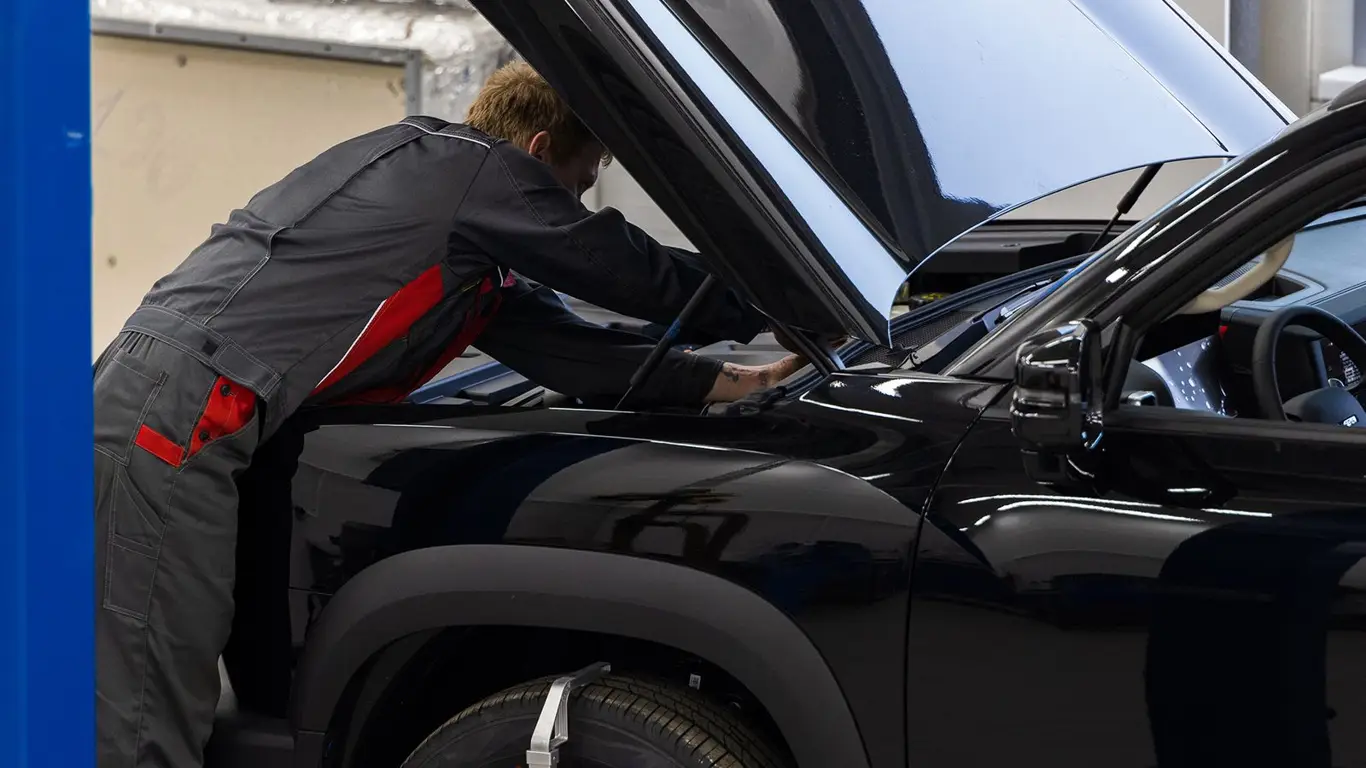
Similar situations are being reported by owners of the BMW 330e, Mercedes C/E/GLC 350e, Volkswagen Golf GTE and Passat GTE, as well as Kia and Hyundai models. A common cause is moisture ingress, which triggers cascading damage to electrical modules.
The Stance of Service Centers and Manufacturers
EV-Clinic, a European service specializing in electric vehicle repair, states plainly that first-generation PHEVs are aging poorly. Customers from Germany, Austria, and Italy prefer to have their cars transported to Croatia, where specialists perform targeted electronics repairs and replace individual cells rather than entire modules. This drastically reduces repair costs, but even then, many vehicles reach the brink of economic viability.
Automakers themselves are reluctant to comment. BMW and Mercedes confirm that battery warranty coverage is six years or 100,000 km, but acknowledge the high cost of parts—for instance, a battery module for a BMW 225xe or 330e costs around €7,440, excluding labor.
Risks in the Used Market and the Outlook for New Generations
These problems have led to an expected reaction: prices in the used PHEV segment are falling, and buyers are scrutinizing service history and battery condition more carefully. Experts advise choosing ex-fleet vehicles, which were charged less frequently, and always checking the state of health and condition of the high-voltage electronics.
There should be no illusions: if the hybrid system fails, the car won't run even in pure petrol mode—the high-voltage circuit is essential for operation.
It's worth emphasizing that this specifically concerns first-generation plug-in hybrids. Starting around 2020, manufacturers moved to 15–20 kWh batteries, which halved the number of cycles for the same mileage and reduced thermal stress on the cells.
The Volkswagen Golf eHybrid serves as an example, with nearly 20 kWh of usable capacity and over 140 km of electric range under the NEDC standard. However, the real long-term durability of these newer systems will only become clear with time.